
Ghana’s digitalisation drive is delivering only partial gains in financial inclusion, as gaps in electricity, internet access and basic infrastructure continue to limit how—and for whom—digital financial services work.
This emerged at the WEE-Ghana policy convening on digitalisation and financial inclusion, held in Accra on April 30. The event brought together stakeholders from academia, government, regulatory bodies, civil society and the development sector. It also created space to bridge policy and women’s economic realities, following field research that showed how financial inclusion and digitalisation policies are shaping women’s livelihoods in both intended and unintended ways.
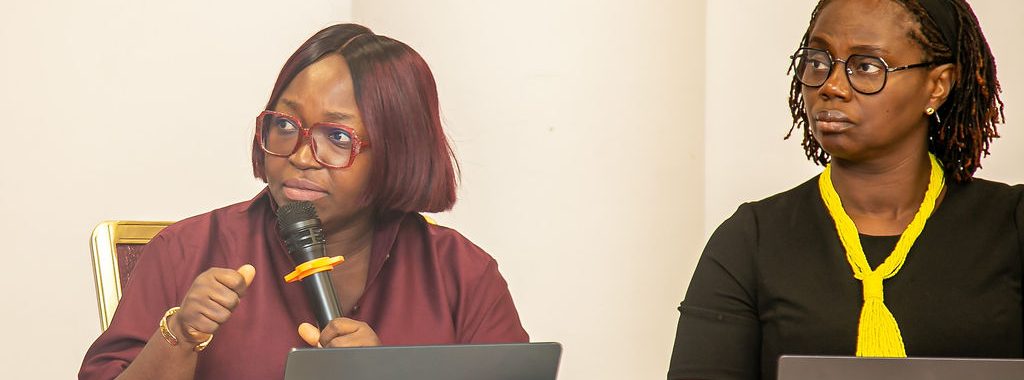
Sharing findings from the research, an early-career scholar, Dr. Geraldine Ampah, highlighted that national digitalisation efforts were often built on assumptions that do not reflect realities on the ground.
“Digitalisation… is based on the assumption that electricity, water and internet infrastructure exist across the country—and that is not the case.”
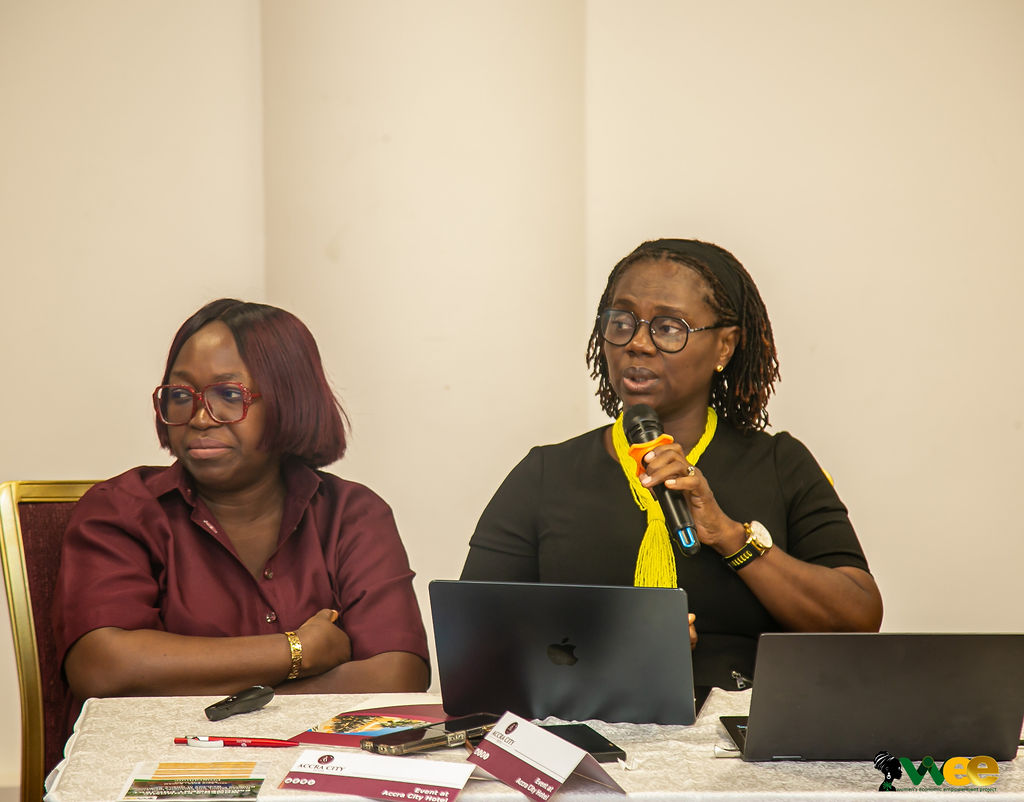
Dr. Aning Oppong-Duah sharing insights on financial inclusion
She further noted, that although national data point to high levels of electrification and growing internet penetration, “Our field evidence reveals there are still some communities that do not have electricity, and more importantly, electricity in Ghana is not stable. The same is true for the internet: some communities lack connectivity, and even where it exists, the internet is not stable—network failures regularly disrupt essential services.”
Turning to financial inclusion, a co-researcher, Dr. Ama Aning Oppong-Duah outlined two key trends emerging from the fieldwork. While access to mobile money and other digital services had expanded, she noted that usage was shaped by cost and reliability concerns, with transaction charges reducing the value of already limited incomes.
“Yes, mobile money particularly has significantly improved the ease of transactions, but charges are too much… just moving the money around, it keeps reducing.”
More fundamentally, she observed that access to financial services did not necessarily translate into improved economic outcomes, as many users lacked the income base needed to fully benefit from these systems.
Despite these, the study found that digital financial services—particularly mobile money—have significantly improved the ease of transactions, enabling users to send, receive and store money more conveniently. The discussions that followed during plenary surfaced deeper structural issues that went beyond access to digital tools. Participants stressed that digital solutions could not substitute for basic infrastructure, but must instead build on it.
One noted, “We need to improve access first, once these fundamental things are there, we can layer digitalisation on top of it, because it [access] is foundational.”
Among others, there were calls for more targeted institutional action to bridge connectivity gaps in underserved communities and enable private sector participation, as well as addressing structural constraints, such as limited access to affordable credit which narrowed the range of viable options available to users.
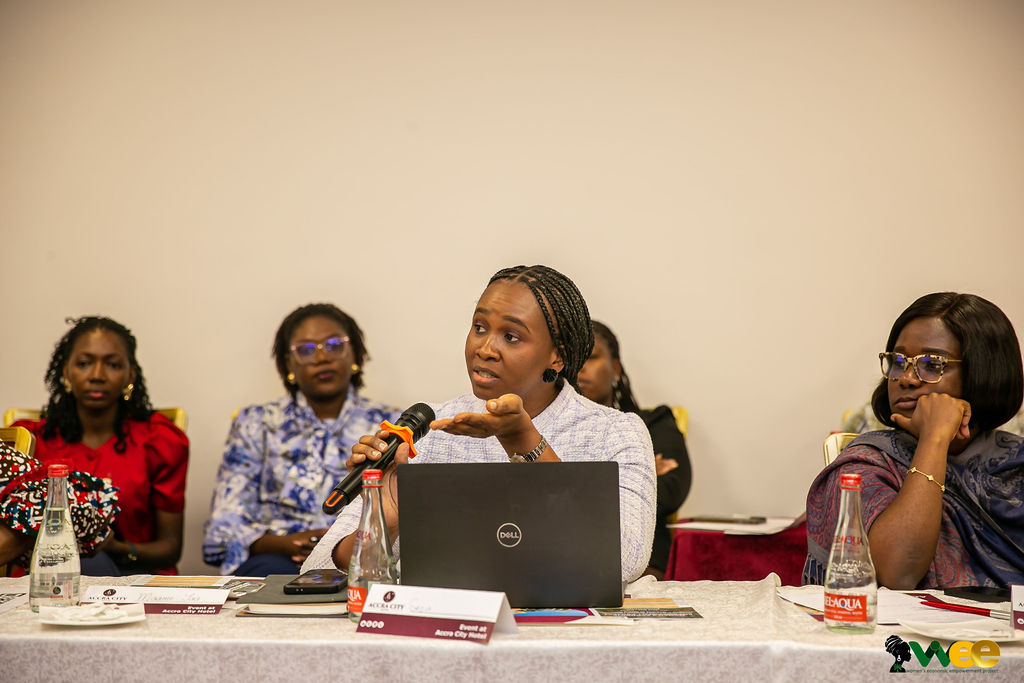
A stakeholder participant highlighting an issue during plenary
The convening on digitalisation and financial inclusion forms part of six thematic policy areas under the Promoting Effective Policies for Women’s Economic Empowerment Project—an initiative aimed at generating evidence to inform policies that create an enabling environment for women’s financial inclusion, business growth and economic agency. Now in its final year, the project has, over its three-year lifespan, undertaken extensive research and stakeholder engagements to assess the policies, institutional processes and lived experiences shaping women’s participation in the economy.
Click on the link below to access the visuals captured at the event.