
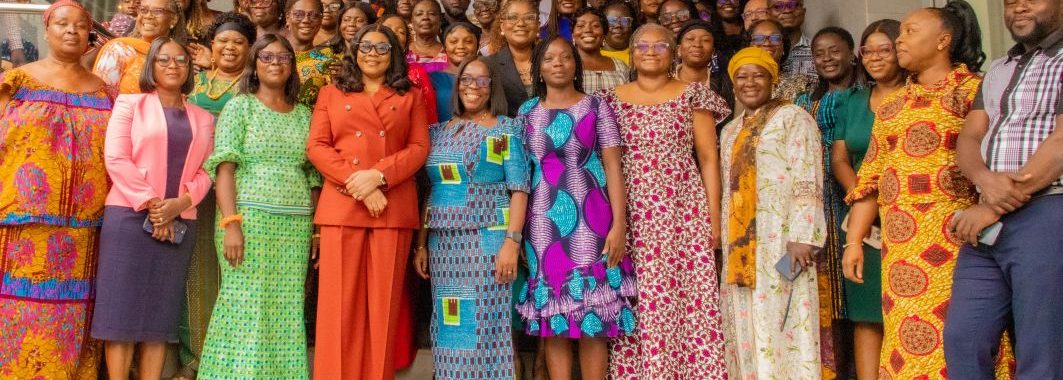
“The measure of any good policy, whether monetary or regulatory, is whether, at the end of the day, it achieves its aim, which is essentially to improve the lives that it was intended to touch,” Second Deputy Governor of the Bank of Ghana, Mrs Matilda Asante-Asiedu, has said.
Her observation placed the question of policy effectiveness at the centre of discussions at the WEE-Ghana Close-Out Conference in Accra. Held on November 10 and 11, 2026, the conference convened researchers, policymakers, civil society organisations and other stakeholders to examine how government policies shaped women’s economic empowerment in Ghana.
Chairing the opening session of the two-day conference themed Beyond Intent: Re-examining Policies and their Implications for Women’s Economic Empowerment in Ghana, Mrs Asante-Asiedu challenged policymakers to look beyond the existence of policies and programmes to examine their effects on intended beneficiaries. She framed the challenge with a question that lay at the heart of the three-year research: “To what extent do government policies empower the average woman?”
Referring to information on public support programmes presented in the conference materials, she observed that initiatives intended to provide concessional assistance, including through agencies such as the Microfinance and Small Loans Centre (MASLOC) and Ghana Enterprises Agency, had not reached women in the rural communities represented in the research.”
“That clearly shows that there’s a lot of work to be done to reach or to take the policy to everybody,” she bemoaned, “because that was the whole point: it is a national policy, not a city policy.”
Using financial inclusion to illustrate the distinction between access and impact, Mrs Asante-Asiedu acknowledged Ghana’s progress in account ownership. She cited the World Bank’s Global Findex Database 2025, noting account ownership among adults in Ghana stood at 81.2 per cent, compared with 58.2 per cent across Sub-Saharan Africa.
However, she cautioned that access alone is not sufficient. “But that’s not the end. It’s just a means to an end,” she said, emphasising that the goal must go beyond access to “meaningful use and financial health”. This, she explained, would enable individuals to leverage financial services for personal growth, business growth, community development and wider economic advancement.
The Second Deputy Governor’s remarks were particularly pertinent as Ghana works towards developing its next five-year financial inclusion and financial health strategy. She commended the WEE-Ghana research agenda, recognising its relevance to the ongoing policy discussions.
“The evidence generated by the WEE-Ghana project is timely and relevant to this policy process, as it affords the opportunity to measure whether the policies are delivering tangible improvements in the lives of the communities and women they are intended to serve.”
The challenges identified by the research extended beyond financial inclusion. Across the six policy areas examined—domestic revenue mobilisation, public expenditure, financial inclusion, digitalisation, employment and care—the findings pointed to gaps in the design and implementation of policies affecting women’s economic lives. These included digital divides shaped by geography and socio-economic circumstances, inadequate attention to the working conditions of women in the informal economy, and the disproportionate burden of unpaid care borne by women and girls.
A review of 22 care policies, for instance, revealed that they tended to focus more on care recipients than on caregivers, leaving the time, labour and economic well-being of those providing care insufficiently addressed. In employment, the research identified inadequate provisions for addressing the precarious working conditions experienced by many women in the informal economy. It also highlighted weaknesses in the relationship between women’s contributions to public revenue and the provision of essential public services and infrastructure.
The WEE-Ghana Project is a three-year research and policy-engagement initiative based at the University of Ghana. Combining policy analysis with primary qualitative research, it examined six thematic areas: financial inclusion, digitalisation, government spending, domestic revenue mobilisation, employment and care.
The close-out conference marked the culmination of the first phase of the project and provided a platform for stakeholders to engage with its findings, draw connections across the six policy areas and consider their implications for policy and practice. Implemented in collaboration with the Network for Women’s Rights in Ghana (NETRIGHT) and the Executive Women’s Network (EWN), the project sought to strengthen the evidence base for gender-responsive policymaking, build the capacity of researchers and policymakers, and deepen collaboration among researchers, women’s organisations and policy stakeholders.
Click on the link to view photos of Day 1 and Day 2 of the event.