
A clean, professional community health center or school setting in Ghana, visualizing care as a planned "public good"

From Leave Reform to Care Systems

National discussions on maternity and paternity leave are gaining momentum. Questions of duration and financing are now firmly on the table. Yet beneath those debates lies another issue: who will actually benefit from reform?

Much of the proposed framework is anchored in labour law, and labour law governs formal employment relationships. However, most Ghanaian women do not work within formal payroll systems. They trade, farm, braid hair, cook and sell, and move between informal contracts and seasonal work. For them, time away from work does not mean paid leave; it means lost income.

This concern surfaced during the WEE-Ghana convenings. Participants questioned whether reforms tied strictly to formal employment risk protecting a minority while leaving the majority exposed. If access is limited to formal workers, salaried employees gain security while informal workers absorb the shock.

Redistribution in this sense is not only about gender or employer financing. It is also about inclusion. If care protections remain confined to formal labour systems, reform may unintentionally widen the gap between women in office settings and those in markets, farms and small enterprises.

For this reason, the conversation cannot stop at amendments to the Labour Act. It must also ask how maternity protections can reach women outside payroll systems, what mechanisms could provide income security for informal workers during care periods, and how policy design can reflect the realities of women’s work in Ghana.

These are issues that the Labour Act and related legislation could address if policy frameworks more fully reflect the structure of Ghana’s labour market and make provisions for workers who do not have an employer.Care policy that excludes the majority of women remains incomplete. The deeper challenge is therefore not only how long leave should be, or who finances it, but whether reform reflects Ghana’s labour structure.

Care is still treated as a private matter. But it is public infrastructure.When caregiving is framed as a personal obligation, the burden settles quietly on households — and most heavily on women. When it is recognised as infrastructure, the frame shifts.

Infrastructure is planned. It is financed. It is maintained. It is treated as essential to economic productivity. Roads are infrastructure. Energy systems are infrastructure. Digital networks are infrastructure.

Care is no different.Without childcare, eldercare and social protection, women’s labour force participation becomes fragile. Businesses lose productivity. Families absorb shocks alone.

Redistribution at this level means more than adjusting leave duration or funding mechanisms. It means asking whether Ghana is prepared to invest in:

  • Public childcare systems
  • Workplace care standards
  • Social insurance expansion
  • Budget allocations that recognise care as economic support

This is not a social add-on. It is economic design. When care remains invisible in public budgeting, women subsidise the economy with unpaid labour. When care is built into public systems, the economy stabilises.

Over the past instalments, one theme has surfaced consistently: care reform is not a single policy adjustment; it is a structural shift. It requires sharing caregiving responsibilities more equitably between women and men, distributing costs in ways that do not distort labour markets, extending protections beyond formal employment, and recognising care as essential to national development.

These insights did not emerge in abstraction. They were sharpened through the WEE-Ghana project’s inception meeting in April 2024 and deepened through subsequent policy convenings in 2025.

As the project enters its third and final year, the work moves from exploration to consolidation. The findings emerging from these engagements and analyses will provide empirically grounded lenses to shape a more responsive and inclusive policy landscape.

This is not about adding another policy provision. It is about ensuring that reform reflects reality.

Follow the conversation and our ongoing work as it unfolds.
Find us on X and Instagram @ugpepwee, and on Facebook at Promoting Effective Policies for Women’s Economic Empowerment in Ghana

Diverse hands (symbolizing the state, employer, and family) working together on a task, representing the "shared social responsibility"

Who Pays for Care?

Sharing care is one thing. Sharing its cost is another. If Blog 2 examined how caregiving responsibilities might be more equitably distributed between women and men, this instalment turns to a practical question: when leave is extended — or formalised across the labour market — who absorbs the financial burden?

While public servants currently receive five working days of paternity leave, there is no universal statutory entitlement for private sector workers. The ongoing review of the Labour Bill seeks to formalise paternity leave nationwide and extend maternity leave beyond the current 12 weeks.

These proposals bring financing to the forefront. Discussions have focused, understandably, on time — maternal recovery, exclusive breastfeeding, father involvement. But time away from work carries economic consequences. And someone pays.

At the April 2024 inception meeting, employer representatives raised a concern that remains relevant today: if extended leave is financed solely by individual firms — particularly small and medium enterprises — does this create disincentives to hire or promote women of reproductive age?

The concern was not about whether care matters. It was about sustainability. If one employer bears the full cost of paid leave while managing workflow disruptions, the risk is not only financial strain — it is labour market distortion. In such a system, women of reproductive age may be perceived, however unfairly, as higher-cost hires.

That is why another perspective raised during the convenings pointed toward pooled financing mechanisms — systems where maternity and paternity protections are supported collectively rather than absorbed by individual employers.

This shifts the frame. The sharing of cost is not simply about fairness within households. It is about economic design.

Should maternity and paternity leave be treated as:

  • A private employer obligation?
  • A shared social insurance responsibility?
  • A hybrid model?

These financing questions are now part of the ongoing review of the Labour Bill, as the Ministry of Employment and Labour Relations engages stakeholders on the “who pays” principle.

Extending leave without resolving financing risks creating tension between social protection goals and labour market realities. Recognition affirms the value of care, but the design of financing systems determines whether reform is durable.

Yet another challenge remains. Even if the cost of leave is shared between employers and the state, who ultimately benefits from these protections — and who remains excluded?

In the next blog, we widen the lens further by turning to the question of informal sector inclusion.

Follow the conversation as it unfolds.
Find us on X and Instagram @ugpepwee, and on Facebook at Promoting Effective Policies for Women’s Economic Empowerment in Ghana.

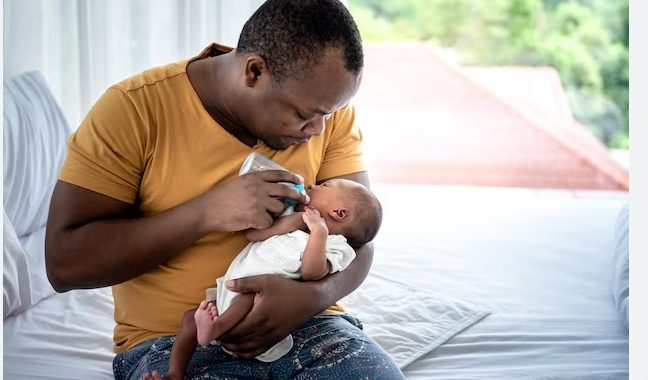
Challenging the "biological framing" of care by showing active

Sharing Care: The Harder Reform

If the April 2024 inception meeting established that care is economic infrastructure, subsequent convenings surfaced another reality: care reform requires revisiting long-standing assumptions about who is responsible for care.

At the 2025 Care Policies Convening, an early career researcher working on the care component under the Social Policies prong of the WEE-Ghana project, Dr. Faustina Obeng Adomaa, guided participants through a closer examination of gendered expectations. In framing the discussion, she noted how caregiving is often morally regulated in Ghanaian society.

The remark revealed how caregiving becomes a measure of womanhood. She further observed how early these expectations are instilled: it is common to hear parents scold their girl child about learning domestic responsibilities, while boys are rarely asked the same questions.

Redistribution of care responsibilities, then, does not begin in Parliament. It begins in childhood. If boys are not socialised into care, longer maternity leave may protect women’s time — but it does not rebalance responsibility.

Participants also questioned the biological framing of caregiving. As one noted, caregiving is often assigned to women on the assumption that women are naturally better suited to caring labour.

When care is treated as inherent to women, policy change appears optional. When it is recognised as socially organised labour, shared responsibility becomes logical.

Extending maternity leave recognises women’s caregiving role. Introducing paternity leave affirms that caregiving is shared. As Ghana advances discussions on both, the debate moves beyond duration. It turns to distribution.

Recognition builds agreement. Sharing care strengthens families, workplaces and economies. If care is to be shared more equitably between women and men, policy must reflect that balance — not only in law, but in practice.

Beyond the redistribution of care labour among men, women, boys and girls, there is also the question of what kinds of care and care-related work should be done within households and what responsibilities should be supported outside the home through public and private systems.

The current provision of five working days of paternity leave for public sector workers also raises questions about whether such short leave periods meaningfully support fathers’ participation in caregiving. In this sense, the existing provision risks remaining largely symbolic rather than transformative.

Experiences from other African contexts suggest that longer and better-designed paternity leave policies can encourage greater participation by fathers in early childcare.

And this leads to another question raised during the WEE-Ghana convenings: if caregiving responsibilities are shared, how should the costs associated with care be shared?

In the next blog, we turn to the economic side of reform — examining financing models, employer incentives and state responsibility.

Follow the conversation as it unfolds.
Find us on X and Instagram @ugpepwee, and on Facebook at Promoting Effective Policies for Women’s Economic Empowerment in Ghana.

A high-angle view of Ecobank's modern headquarters

Beyond Maternity Leave: Who Shares Care in Ghana?

A Four-Part Series on Redistribution, Reform and Women’s Economic Empowerment

Ghana is rethinking its labour laws. As of early 2026, the proposed Labour Bill seeks to extend maternity leave beyond the current twelve weeks and formalise paternity leave nationwide. While the bill remains under review, one thing is clear: caregiving has moved to the centre of labour policy debate.

Care refers to the activities required to sustain individuals and households. These include childcare, caring for the elderly and sick, cooking, cleaning, household management and other forms of unpaid domestic and reproductive labour. These activities sustain families and communities and make participation in the market economy possible, yet they are often treated as private responsibilities rather than matters of public policy.

This reform moment raises a deeper question. When leave policies change, who adjusts? Who bears the cost? Who gains protection — and who remains exposed? In other words, how is care shared across households, workplaces and the state?

Across this series, we reflect on how the current maternity and paternity leave debates intersect with deeper structural questions about care responsibilities, financing, informal sector inclusion and public investment in care. Each instalment situates WEE-Ghana’s research and stakeholder convenings within the evolving national policy conversation.

In this series, we return to the questions first raised in April 2024 and deepened through subsequent convenings: redistribution of care, informal sector inclusion, employer incentives, life-course economic security and the broader policy architecture shaping women’s economic futures.

The question is not whether care matters. It is whether policy makers are prepared to treat it as foundational.

Part 1

Care Is Economic Infrastructure — And This Conversation Did Not Begin in 2026

In February 2026, the Minister for Gender, Children and Social Protection, Dr Agnes Naa Momo Lartey confirmed that consultations are underway to extend Ghana’s current 12-week maternity leave. Proposals range from 14 weeks to as much as four to six months, alongside parallel efforts to formalise paternity leave nationwide. But this policy moment did not emerge overnight.

A year earlier, during her January 2025 confirmation hearing before Parliament, Dr Lartey signalled her intention to champion maternity leave reform as a core policy priority. That announcement crystallised an issue that had long been simmering beneath Ghana’s labour framework. Yet even that was not the beginning.

For WEE-Ghana, the structural tensions underpinning today’s debate surfaced earlier — on 30 April 2024, at the African Regent Hotel, during our inception meeting with 57 stakeholders representing government institutions, employers’ bodies, trade unions, informal worker associations, women’s rights organisations and international agencies. From the outset, a central concern emerged: policies that appear gender-neutral often disadvantage women because they fail to account for the structural realities of care.

The discussion quickly moved from principle to pressure. A business leader from the Executive Women’s Network described the strain her company experienced when several women in management were simultaneously on maternity leave. Although she provided paid leave and flexible arrangements, the financial responsibility rested entirely on the employer.

Representatives from the Ghana Chamber of Commerce and Industry echoed this concern: women’s reproductive roles are socially essential, yet the cost of maternity protection is unevenly distributed. From the International Labour Organisation, an alternative model was introduced — one in which maternity protection becomes a shared social responsibility through pooled social insurance contributions rather than an employer-only burden.

These were not abstract reflections. They were early articulations of the structural tensions now animating national reform conversations.

At that April 2024 meeting, stakeholders grappled with questions that remain urgent today:

  • If maternity protection is employer-funded, does it discourage the hiring of women of reproductive age?
  • If leave is extended, who absorbs the cost?
  • How do we design policy in ways that protect women without deepening labour market discrimination?

These questions converge around a foundational insight: care is economic infrastructure because it undergirds the functioning of the market economy. Care is the soft infrastructure that supports the functioning of the market economy, and the entire economy benefits from care, not only women.

Women’s economic empowerment cannot be assessed solely through labour force participation rates or enterprise growth. It must account for the unpaid and under-recognised care work that shapes women’s time, mobility and income continuity.

According to Anyidoho and Adomako Ampofo (2015), women’s labour force participation does not necessarily alter the gendered division of labour within households. Their study of Ghanaian bank workers found that even when women entered formal employment, they continued to bear primary responsibility for care work at home.

Evidence from the Ghana Living Standards Survey Round 7 also illustrates the scale of this imbalance. Time-use data show that women spend significantly more hours than men on unpaid domestic and care work such as cooking, cleaning and caring for children and other dependents (Ghana Statistical Service, 2018).

Co-Principal Investigators Professors Abena Oduro and Akosua Darkwah underscored that empowerment is not static. Policy environments can enable empowerment in one period and erode it in another. A woman may achieve economic stability — but lose it when healthcare costs, caregiving demands or weak social protection systems impose unexpected burdens.

This is why care policy sits within WEE-Ghana’s six priority policy areas under social and employment policy. The national maternity leave debate now unfolding does not introduce a new issue. It validates the structural concerns raised in April 2024.

Extending maternity leave, introducing paternity leave and encouraging workplace childcare signal recognition. But recognition is only the first step. The deeper question is whether care will finally be integrated into Ghana’s macroeconomic, labour and social protection architecture — or continue to be absorbed privately by women.

Care is not peripheral. It is foundational to economic planning. The labour that sustains households — raising children, supporting dependents and maintaining daily life — reproduces the workforce on which the economy depends.

In the next blog, we turn to the question of how caregiving responsibilities themselves are distributed within households and societies, and what this means for sharing care between women and men.

Follow the conversation as it unfolds.
Find us on X and Instagram @ugpepwee, and on Facebook at Promoting Effective Policies for Women’s Economic Empowerment in Ghana.

Visuals for the blogs are courtesy of Getty images