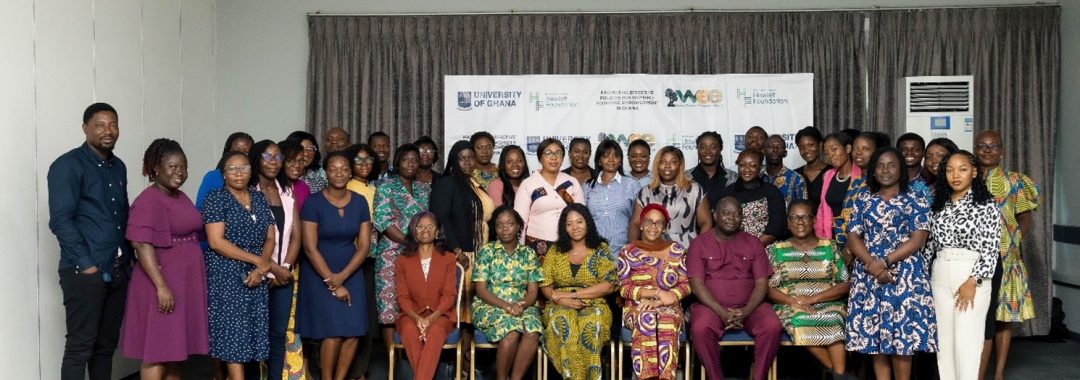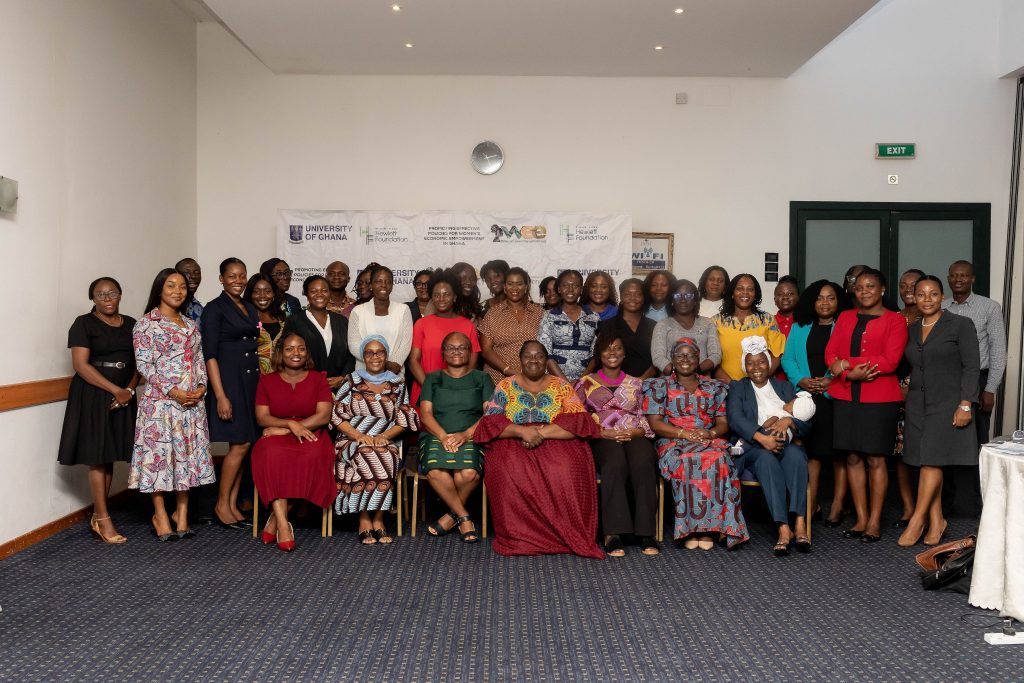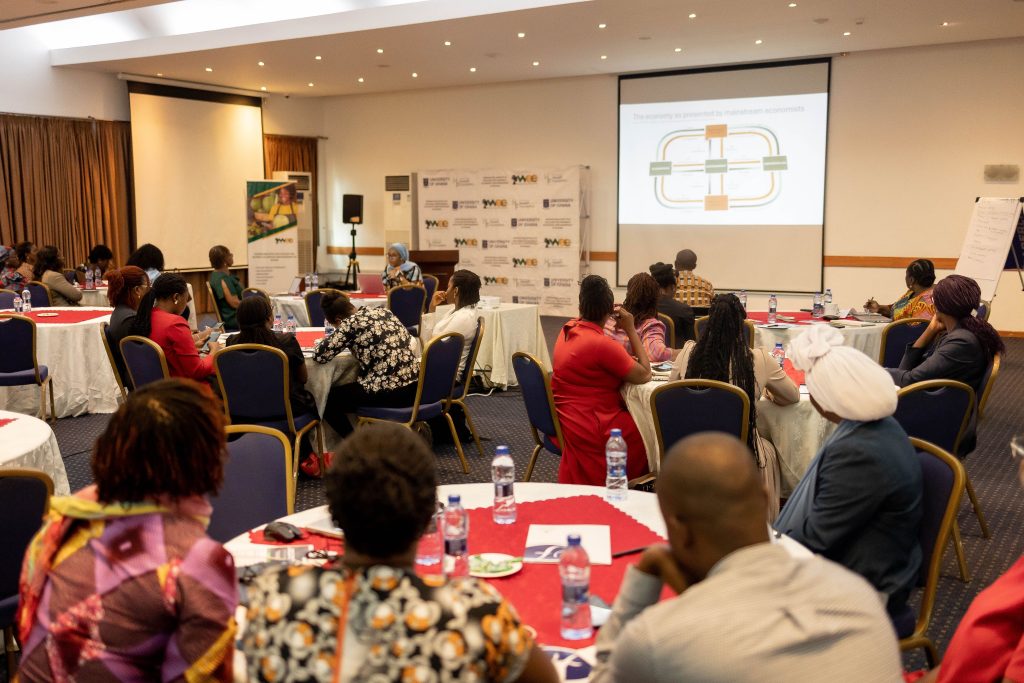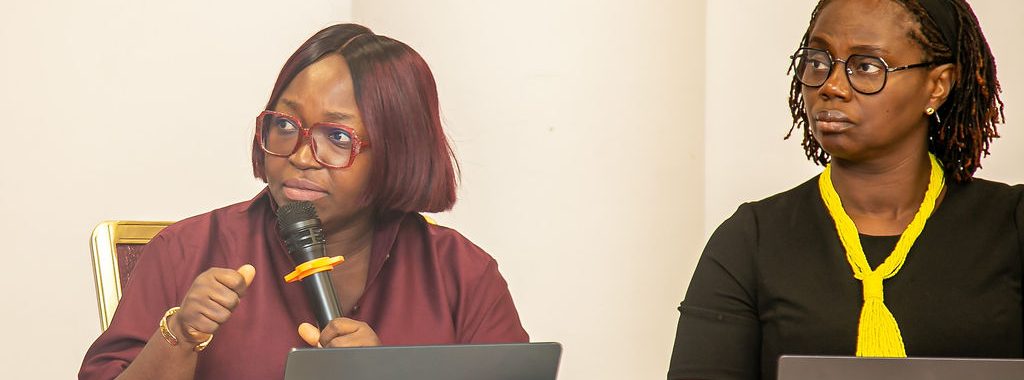
Dr. Ampah leading the presentation on digitalisation

Ghana’s Digitalisation Drive Delivers Uneven Gains in Financial Inclusion

Ghana’s digitalisation drive is delivering only partial gains in financial inclusion, as gaps in electricity, internet access and basic infrastructure continue to limit how—and for whom—digital financial services work.

This emerged at the WEE-Ghana policy convening on digitalisation and financial inclusion, held in Accra on April 30. The event brought together stakeholders from academia, government, regulatory bodies, civil society and the development sector. It also created space to bridge policy and women’s economic realities, following field research that showed how financial inclusion and digitalisation policies are shaping women’s livelihoods in both intended and unintended ways.

Sharing findings from the research, an early-career scholar, Dr. Geraldine Ampah, highlighted that national digitalisation efforts were often built on assumptions that do not reflect realities on the ground.
“Digitalisation… is based on the assumption that electricity, water and internet infrastructure exist across the country—and that is not the case.”
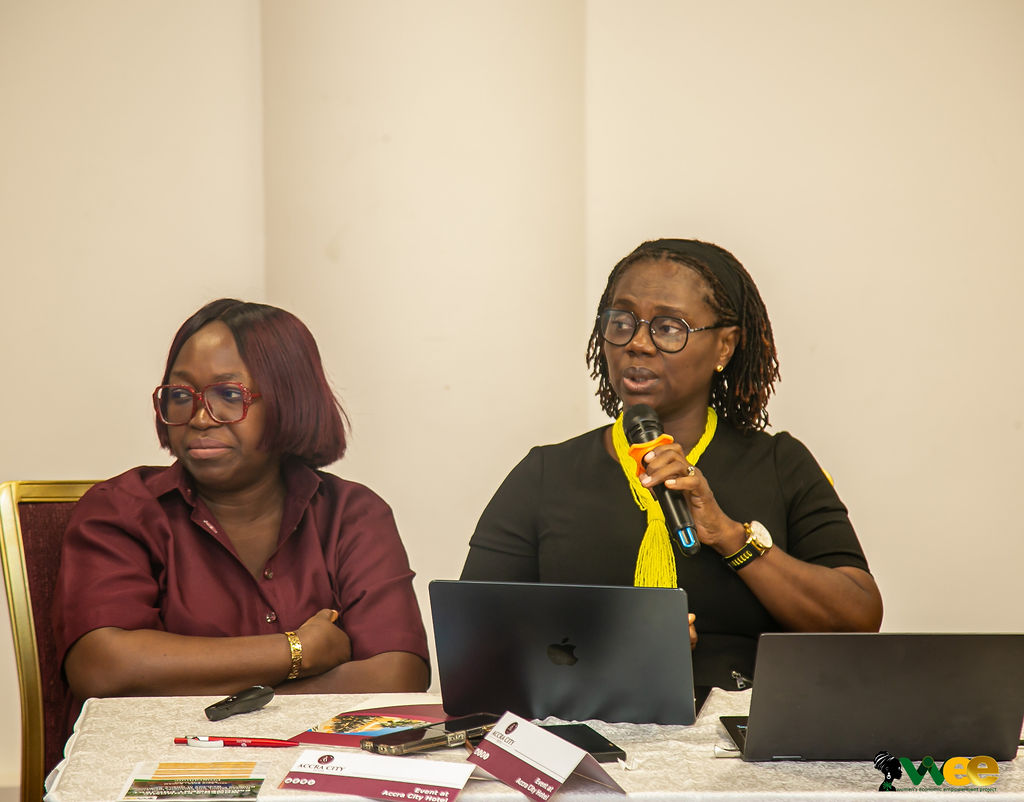
Dr.-Aning-Oppong-Duah-sharing-insights-on-financial-inclusion.

Dr. Aning Oppong-Duah sharing insights on financial inclusion

She further noted, that although national data point to high levels of electrification and growing internet penetration, “Our field evidence reveals there are still some communities that do not have electricity, and more importantly, electricity in Ghana is not stable. The same is true for the internet: some communities lack connectivity, and even where it exists, the internet is not stable—network failures regularly disrupt essential services.”

Turning to financial inclusion, a co-researcher, Dr. Ama Aning Oppong-Duah outlined two key trends emerging from the fieldwork. While access to mobile money and other digital services had expanded, she noted that usage was shaped by cost and reliability concerns, with transaction charges reducing the value of already limited incomes.

“Yes, mobile money particularly has significantly improved the ease of transactions, but charges are too much… just moving the money around, it keeps reducing.”
More fundamentally, she observed that access to financial services did not necessarily translate into improved economic outcomes, as many users lacked the income base needed to fully benefit from these systems.

Despite these, the study found that digital financial services—particularly mobile money—have significantly improved the ease of transactions, enabling users to send, receive and store money more conveniently. The discussions that followed during plenary surfaced deeper structural issues that went beyond access to digital tools. Participants stressed that digital solutions could not substitute for basic infrastructure, but must instead build on it.

One noted, “We need to improve access first, once these fundamental things are there, we can layer digitalisation on top of it, because it [access] is foundational.”
Among others, there were calls for more targeted institutional action to bridge connectivity gaps in underserved communities and enable private sector participation, as well as addressing structural constraints, such as limited access to affordable credit which narrowed the range of viable options available to users.
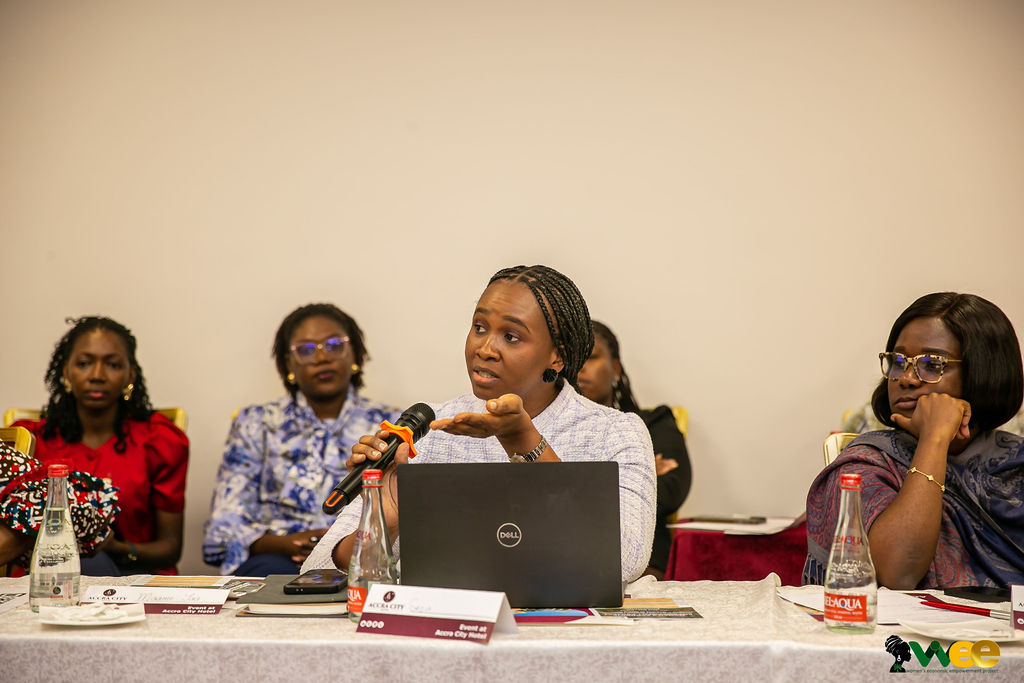
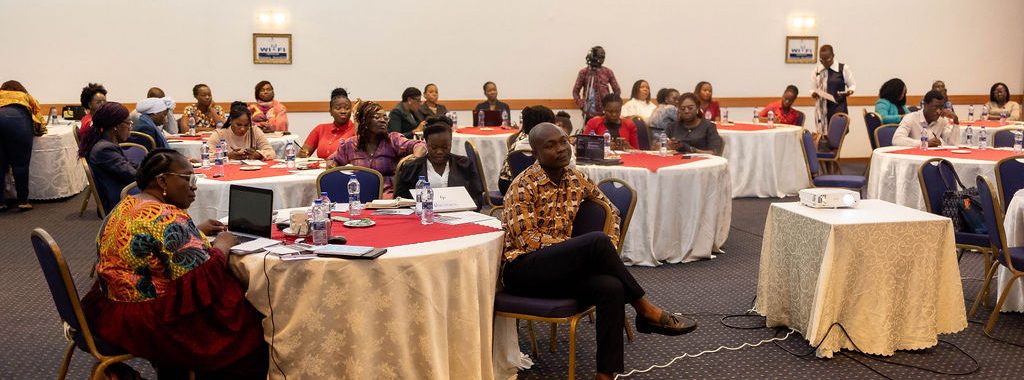
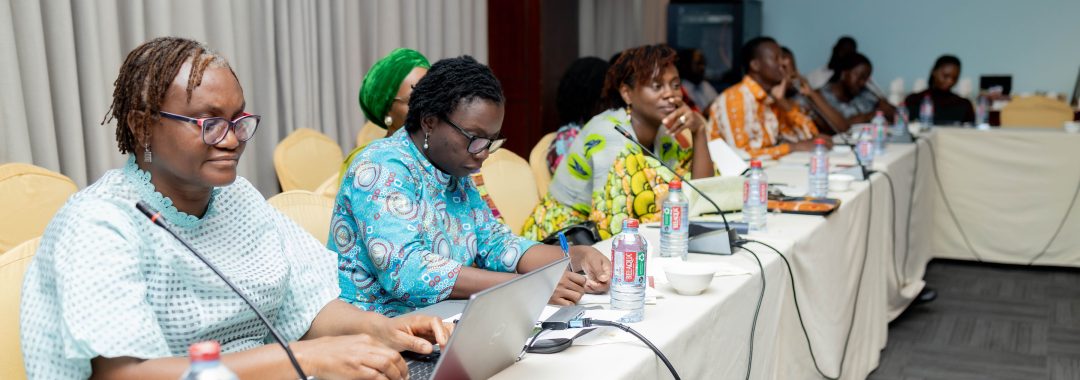
A stakeholder participant highlighting an issue during plenary

A stakeholder participant highlighting an issue during plenary

The convening on digitalisation and financial inclusion forms part of six thematic policy areas under the Promoting Effective Policies for Women’s Economic Empowerment Project—an initiative aimed at generating evidence to inform policies that create an enabling environment for women’s financial inclusion, business growth and economic agency. Now in its final year, the project has, over its three-year lifespan, undertaken extensive research and stakeholder engagements to assess the policies, institutional processes and lived experiences shaping women’s participation in the economy.

Click on the link below to access the visuals captured at the event.
https://visstudio.pixieset.com/weeproject/

Photo WEE ID

International Women’s Day 2026 | Give to Gain

At WEE-Ghana, we believe that advancing women’s economic empowerment requires intentional policy choices. From macroeconomic policy to care, employment, financial inclusion and digitalization, the right investments can transform women’s economic opportunities across Ghana.
This International Women’s Day, our team reflects on the theme “Give to Gain” — a reminder that when societies invest in women, economies grow stronger and more inclusive.

Watch the video and follow the conversation on X and Instagram @ugpepwee, and on Facebook at Promoting Effective Policies for Women’s Economic Empowerment in Ghana

The WEE-Ghana Project Holds Convening on Care Policies and Their Implications for Women’s Economic Empowerment

The WEE-Ghana Project has organised a convening on Care Policies and their Implications for Women’s Economic Empowerment, bringing together policymakers, academics, civil society actors, and development practitioners to deliberate on how Ghana’s care economy can be better integrated into national policy frameworks.

Held recently at the Fiesta Royale Hotel in Accra, the forum provided a platform to interrogate the impact of care policies on women’s economic empowerment.

An early career researcher on the care component of the social policies prong of the initiative, Dr. Faustina Obeng Adomaa, led the presentation, sharing compelling data that reframed care not as a domestic concern, but as a fundamental pillar of the economy. She argued that activities like childcare, cooking, cleaning, and caring for the sick and elderly constituted essential social reproduction without which the formal, productive economy could not function.

“The fact that these reproductive things are done is the reason why we have what we call the productive economy,” Dr. Obeng Adomaa stated. “Unpaid care work subsidises the entire economic system.”

Despite its central role, the researcher noted that care work—largely invisible in national accounts—remained a critical barrier to women’s economic participation.

“Women continue to bear a disproportionate share of unpaid care responsibilities, which affects their ability to engage productively in the labour market,” she said.

Drawing on both global and local data, she revealed that 76% of unpaid care work was performed by women, with the International Labour Organisation (ILO) estimating that globally, 708 million women were outside the labour force due to care responsibilities. In Ghana, time-use data showed that women performed an average of 3.78 hours of unpaid care work daily, compared to 1.1 hours for men, resulting in longer and more demanding total workdays.

Crucially, Dr. Obeng Adomaa argued that these stark figures likely underestimated the true burden. She highlighted what care researchers called “child-minded” or “home-minded” work—the constant mental load of managing a household and family needs even in one’s physical absence.

“This constant mental load—the care work you perform in your mind even when you’re not there—is an invisible burden we can no longer ignore,” she explained. “If you are here this morning and your child is sick at home, you are likely to call two or three times to check in. This cognitive burden is not captured by simply counting hours of physical tasks.”

Other insights from nearly two years of desk research and preliminary field data were equally instructive. While Ghana’s national policies on childcare, health, ageing, and disability were found to be well-framed, implementation gaps persisted. The National Inclusive Education Policy was cited as a case in point. “Every single school you go to in this country is totally unprepared to take care of a special [needs] child,” Dr. Obeng Adomaa reported. “Meanwhile, the inclusive education policy was to enable these children with disabilities or special needs to be integrated into the regular school system. So for children with disability, the only place that can offer care is the home.”

Similarly, her findings identified significant challenges with the National Health Insurance Scheme (NHIS), where chronic underfunding and limited coverage forced patients to pay out-of-pocket for drugs. She also noted a trend of shortened hospital stays, which shifted the burden of post-operative and critical care from health facilities back into households—a responsibility that fell disproportionately on women.

The presentation sparked a vibrant plenary session as participants connected the findings to lived realities.

A healthcare professional pushed back on assumptions about the National Health Insurance Scheme (NHIS) and its role in hospital discharge decisions, clarifying that, “ “Insurance does not come in to play at all in determining how long a woman stays on the hospital bed. The fundamental test is: is the patient better? Can the bed be available for the next patient? You have to save that life.”

However, other participants echoed the research’s findings on the NHIS’s limitations. One woman shared a frustrating personal experience: “I had an NHIS card, and it was so frustrating at the end of the day, I went to a pharmacy shop and when they asked me whether I was using NHIS, I said no, I’m paying cash. Suddenly the drug appeared.”

A representative from Ghana Federation of the Disabled, articulated the need for structural support for persons with disability, shifting the burden from families to the state: “Forgive me, I did not create the open gutters for which reason I can’t go out by myself. It is the government that creates all these things and causes the barriers. By asking for policies to redistribute the onus to government institutions, we help reduce the burden on our families.”

As the way forward, the research advocated for the transformative 5R Framework to reshape the care economy: Recognise the economic value of unpaid care work; Reward paid care work with fair compensation; Redistribute care responsibilities more equitably to men, the state, and the market; Reduce the burden through investments in time-saving infrastructure; and Reclaim care as an essential public service.

Wrapping up, one theme was distinct – “The message is clear: we need to value care work,” the lead presenter advocated. “And that starts by ensuring the burden doesn’t fall on women alone.”

The WEE project based at the University of Ghana is a three-year project designed to achieve a critical mass of economically empowered women. A major outcome of this project is to build a network of policymakers sensitive to the gendered impact of policies and dedicated to the development and implementation of gender responsive policies that will lead to women’s economic empowerment.  This meeting – the fourth of six convenings planned over the lifetime of the project offered a space for continued discussions towards this goal.

Click here to view the Photo Gallery of the event

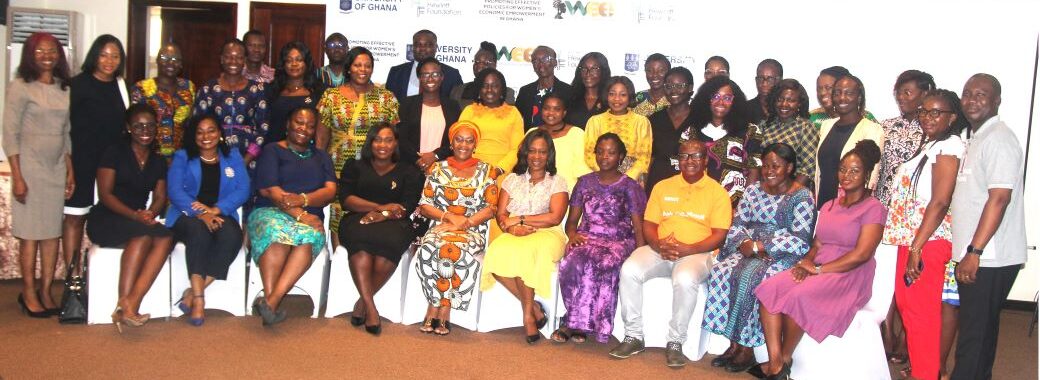
Group photo of participants at the event

Advancing Women’s Economic Empowerment Through Gender-Smart Taxation

The ‘Promoting Effective Policies for Women’s Economic Empowerment’ (WEE-Ghana) project has convened key voices from government, civil society organisations (CSOs), academia, the private sector, and the informal economy to advance dialogue on gender-responsive taxation as a catalyst for women’s economic empowerment.

Held on April 24, 2025, at the Fiesta Royale Hotel in Accra, the deliberations focused on how taxation policies could better support women’s economic inclusion and address systemic barriers facing women across all productive sectors of the economy. Participants explored critical intersections between tax systems, social protection, and gender equity, reinforcing the urgent need for reforms that authentically reflect the realities of women’s economic participation

In her opening remarks, a co-principal investigator for macro-economic policies, under the project, Professor Abena Oduro, underscored the importance of creating fiscal policies that did not unintentionally disadvantage women but instead promoted entrepreneurship, job creation, and resilience. She noted, “Empowering women economically requires that we look closely at how our tax structures either enable or inhibit growth opportunities for women.”

Further drawing from evidence presented during the sessions, Professor Oduro, expounded on two critical issues: how taxes affected women differently, and what a good, gender-responsive tax system should look like. Tax systems, she highlighted, could not afford to assume neutrality given that, “Taxes affect women differently because the labour market, consumption expenditure, and ownership of assets are gendered, and women disproportionately bear the burden of care.— A gender-responsive tax system, noted the co-principal investigator, had to recognise unpaid care work, reduce burdens from consumption taxes, and support women’s productive ventures, through targeted incentives and better public services.

A researcher on the WEE-Ghana project, Dr. Gloria Afful-Mensah, shared some findings from a year-long analysis of tax policies, revealing how Ghana’s tax system often overlooked gender considerations. Although taxes such as the Personal Income Tax (PIT) and Corporate Income Tax (CIT) were not explicitly gender-biased, there were elements of less obvious (implicit) biases. For instance, while the CIT varied based on the nature, location, and specific activity(ies) of a business, the incentive structure lacked gender sensitivity. As a result, businesses might be less motivated to employ women of reproductive age, anticipating potential interruptions due to their social reproduction responsibilities.

Similarly, the Value Added Tax (VAT) and the Electronic Transfer Levy (E-Levy), while framed as neutral, were found to have gendered effects, with women bearing heavier financial burdens due to gender differences in consumption patterns, economic activity, and care responsibilities. A vivid example of this emerged in the findings of Anyidoho et al. (2023), which revealed that among women in the lowest income quintile, E-Levy payments could consume up to 17% of their monthly earnings, compared to about 14% among men in the same income group — a stark reminder that tax policy impacts were far from gender-neutral. Dr. Afful-Mensah further noted that the removal of the E-levy could greatly benefit women, improve their competitiveness and potentially boost their sales, profitability and overall economic empowerment.

Later in the convening, participants broke into three smaller working groups to critically engage with Ghana’s 2025 Budget Statement. One group reviewed selected tax measures — including the repeal of the Betting Tax, introduction of the Emission Levy, and VAT on motor insurance — to assess their gendered impacts. Another group explored barriers to tax compliance from a gender perspective, examining the challenges women face both as taxpayers and within tax administration. The third group proposed ways to make planned VAT reforms more gender-sensitive, suggesting how fiscal policy design could better address women’s economic realities.

During the group presentations, participants raised critical concerns about the application of VAT on basic food commodities, emphasising how such taxes disproportionately affected low-income households, particularly those headed by women. They highlighted the urgent need for greater tax incentives and targeted reliefs for women-led micro, small, and medium enterprises (MSMEs), arguing that current fiscal measures often overlooked the realities of women entrepreneurs operating within the informal sector.

A participant from the Executive Women Network, a nonprofit comprising senior executives and women entrepreneurs, noted, “Without deliberate exemptions or rebates targeted at women entrepreneurs, we risk widening the very inequalities we say we want to close.”

As the event closed, there was a clear consensus that sustainable economic empowerment for women hinged not only on access to opportunities but also on deliberate policy shifts — and that collaboration between stakeholders would be essential to driving these changes forward.

Photo

Empowering Women Economically: Insights from WEE-Ghana’s Policy Workshop

Empowering women economically isn’t just about offering opportunities; it’s about policymaking and implementation that reflect women’s unique challenges and strengths. This key idea was at the heart of a workshop organised by the “Promoting Effective Policies for Women’s Economic Empowerment” (WEE-Ghana Project) on October 21, 2024 at the Fiesta Royale Hotel, in Accra. The activity brought together key policymakers and representatives from academia, women’s organisations, as well as the business sector. The agenda? Building their capacity to develop and advocate for policies that account for the realities of Ghanaian women.

Participants at the 'Gender-Sensitive Policy Design and Analysis’ workshop

Participants at the ‘Gender-Sensitive Policy Design and Analysis’ workshop

Elaborating on the topic, ‘Understanding the Economy and Economic Policy-Making from a Gender Perspective,’ a co-principal investigator on the project, Professor Abena Daagye Oduro, underscored a gender perspective as looking beyond economic growth as the sole policy goal. Instead, “policies should focus on the well-being of all individuals, environmental sustainability, and equity.”

Professor Oduro further noted that while traditional economic models emphasise productive activities, a gender-inclusive economy, for instance, considers unpaid care work—such as cooking, cleaning, and caregiving—as essential contributions to society. “Recognising and redistributing this unpaid labour is critical to women’s economic empowerment,” she highlighted.

Leading a session on ‘Gender-Responsive Policy-making’ another co-principal investigator, Professor Dzodzi Tsikata, drew attention to the importance of understanding underlying values in policy development. She emphasised that effective policy-making must consider the interests of all affected groups, especially marginalised or disadvantaged ones, to ensure inclusivity and fairness.

“The ‘normative approach’ is more suitable for formulating and analysing policies from a gender equity perspective, unlike the ‘technocratic view’, which narrowly defines success based on empirical outcomes and specific programmatic criteria,” Professor Tsikata argued.

She explained, “The ‘normative’ approach, also, involves using tools that assess gender impact from policy design to implementation. Importantly, gender-sensitive policies must focus on real issues impacting women, such as financial access, fair work conditions, and the burden of unpaid care work, to avoid reinforcing existing inequalities.”

Building Momentum for Change

As the second of six planned workshops, this gathering was more than just a discussion-participants left with fresh perspectives, stronger networks, and a shared commitment to transform policy for the benefit of Ghanaian women everywhere.

Professor Abena Oduro leading the session on 'Understanding the Economy and Economic Policymaking from a Gender Perspective'

Professor Abena Oduro leading the session on ‘Understanding the Economy and Economic Policymaking from a Gender Perspective’

One participant made this observation, “While data is crucial, funding is equally significant, as the source of funding often shapes the research focus and objectives. International organisations generate data tailored to their specific agendas, presenting findings that align with their priorities. However, if the Ghanaian government were to allocate dedicated funds to lead its own research, the resulting data would more accurately reflect the true nature of the issues at hand.”

Another bemoaned how the narrow definition of the term “gender-disaggregation” impacted effective targeting. She noted, “I’ve realised over time that whenever we talk about gender-disaggregation, it typically ends with just men and women. But we need to go further—it should cut across skills levels, and age profiles. This broader approach is essential for effective targeting.”

Why Gender and Policy?

It is an undeniable fact that, Ghanaian women have been integral to the economy, dominating the market scene and today ranking among the world’s top entrepreneurs. However, their economic contributions are not matched by equitable wealth or opportunity. Research shows that while Ghanaian women are highly entrepreneurial, they own only about 30% of household wealth[1] and have limited access to formal financial services—just 42% compared to 55% of men.[2] These numbers highlight a systemic issue: many policies, designed with neutrality in mind, overlook the unique challenges faced by women.

What’s Next?

The momentum is building, and the WEE-Ghana project isn’t slowing down. This three-year initiative, in collaboration with NETRIGHT and the Executive Women’s Network, to achieve a critical mass of economically empowered women in Ghana, is committed to reshaping the policy landscape.

Stay tuned, as we continue this journey, to help create a Ghana where policies uplift and empower women, allowing them not just to participate in the economy but to lead and thrive. Stay informed, get involved, and make a difference with WEE-Ghana.

[1] Oduro et al (2011: 34)

[2] World Bank (2020)

View Photo Gallery

Participants at the policy-makers' dialogue

Empowering Ghanaian Women: WEE-Ghana’s Vision for Economic Equality

In the bustling markets, quiet villages, and even in the air-conditioned office spaces where the click of heels echoes against polished tiled floors, countless Ghanaian women wake up before dawn, balancing the demands of their families with the need to earn a livelihood. They are traders, farmers, caregivers, and professionals, contributing significantly to the nation’s economy, yet often receiving little in return for their tireless efforts. These daily struggles highlight a stark reality: despite their vital roles, many of these women face significant economic inequalities, struggling to receive fair compensation for their labour and talents.
Recognising these disparities, the “Promoting Effective Policies for Women’s Economic Empowerment” (WEE-Ghana) project represents a holistic approach to changing the economic fortunes of the average Ghanaian woman for the better. By fostering gender-sensitive policy-making, through strategic collaboration, WEE-Ghana aims to bridge the gap between women’s contributions and their compensation, ensuring they receive the recognition and financial stability they deserve.
In a significant step towards this mission, WEE-Ghana recently convened two essential stakeholder meetings at the Tang Palace Hotel in Accra.

Dialoguing with women professionals

WEE-Ghana project team and Executive Women Network members’ lunch engagement

The first, which occurred on June 11, 2024, saw the project team engaging with key members of the Executive Women’s Network (EWN), to explore actionable strategies for influencing gender-sensitive policy-making.
In a brief overview, a Co-Principal Investigator, and Associate Professor of Sociology at the University of Ghana, Professor Akosua Darkwah highlighted how literature evidenced the ways in which government’s policies could have unintended negative and positive consequences for women’s economic empowerment. She shed light on several such examples, noting how gender-sensitive policy actions were key to addressing the issue.
Mapping out the specific actions to achieve the project’s goal, she stated, “What we want to do over the next three years is focus on six policies, beginning with an analysis of existing government policies to identify how they can be amended to support women’s economic empowerment. We would then review literature to determine what exists in the larger body of work on these issues, then we will go out next year to do a number of case-studies. This will provide us with real-life stories about the way the different policies either make or unmake women in terms of their economic circumstances.”
The final year, she stated, would be dedicated to dissemination of the findings through academic journals, films, traditional and social media, as well as other formats.
“This is important to enable the average Ghanaian gain an awareness of what the entire intervention is about,” she added.
Professor Darkwah disclosed that the project was keen on partnering with policy-makers, researchers, and women’s groups, out of which, the EWN and the Network for Women’s Rights (NETRIGHT) had been identified as key.
Expressing her enthusiasm towards contributing to the joint endeavour, the Chairperson of the EWN Executive Committee, Madam Janet Sunkwa-Mills, noted, “Leveraging the diverse membership and expertise-base of our Network, coupled with your advocacy from above, and below strategy, are novel approaches, to assisting to create a critical mass of economically empowered Ghanaian women through gender-responsive policy making. “

Engaging with the policy-makers

Participants at the policy-makers' dialogue

Participants at the policy-makers’ dialogue

In a related development, the WEE-Ghana project team, dialogued with key policy-making institutions whose work directly aligned with the project’s focal policy areas.
The event which was held on June 12, 2024, brought together, upper-level policy-makers from the financial, labour and employment, agriculture, communication, and care sectors.
Critical insights emerged from the engagement, which aimed amongst others, to gain an understanding of the nature of policymaking in Ghana, as well as discuss the possibilities for alternative policy-making models that were gender-sensitive. Of noteworthiness was the need for the project to include parliamentarians, and women in politics as critical stakeholder groups for the achievement of its goal. The policy-makers, also identified well-structured and holistic capacity-building, as central to boosting their skills in formulating gender-responsive policies.
Building a network of policymakers sensitive to the gendered impact of policies, and dedicated to the development and implementation of gender-responsive policies for women’s economic empowerment, is a major outcome the WEE-Ghana project articulates. The two-day meeting marks the first of six convenings planned over the lifetime of the project.

How you can support our mission

The journey to economic equality and empowerment for Ghanaian women is a collective effort. We invite you to be a part of this transformative mission. Follow our progress, share your insights, and support our initiatives by visiting our website and connecting with us on social media. Together, we can bridge the gap and ensure that every Ghanaian woman receives the recognition and financial stability she deserves. Stay informed, get involved, and make a difference with WEE-Ghana.

Follow us on social media:

Group Photo

Driving Women’s Economic Empowerment: A Holistic Approach

Efforts at transforming the economic fortunes of the Ghanaian woman has received a renewed and significant boost with the “Promoting Effective Policies for Women’s Economic Empowerment in Ghana” (WEE-Ghana) project. This project represents a holistic and multi-dimensional approach to achieving sustained gains in economic prosperity for Ghanaian women.

At the project’s inception forum, held at the African Regent Hotel in Accra, on 30th April, 2024, a broad spectrum of key stakeholders drawn from various spheres of society convened to deliberate on collaborative pathways for achieving the project’s goals, objectives and overall success.

Addressing the forum, an Associate Professor of Sociology at the University of Ghana, Professor Akosua Darkwah, drew attention to the various ways in which the state’s actions could, either undermine or promote women’s economic empowerment.

She noted, “Various studies have signalled how economic reforms by the Ghanaian state, for example, shrunk public sector jobs, and undermined the extent to which education served as a path to empowerment for younger Ghanaian women. More recently, state efforts at reducing the negative impact of COVID-19 on Ghanaian citizens was discovered to have gendered outcomes with women less likely to benefit from the provisions the state made.”

“In other jurisdictions, such as Nairobi, Kenya, subsidised child-care significantly increased the percentage of women who joined the workforce, while more Ecuadorian wives were found to own couple’s wealth due to the institution of a partial community property regime.”

The Co-Principal Investigator for the WEE project underscored the importance of paying closer attention to the macro-level decision making efforts of policy makers and explore its micro-level impact on women. This wis pivotal to making “better concerted efforts to design policies that ultimately empower women.”

In the ensuing deliberative session, the participants lauded the project’s comprehensive approach towards addressing the policy formulation and implementation gaps constraining the economic empowerment of the average Ghanaian woman. They pledged their commitment and proffered various ways in which their collective efforts could culminate in the achievement of the project’s ultimate goal of achieving a critical mass of economically empowered women in Ghana.

A participant observed, “The public sector is in the process of developing a comprehensive gender strategy, so it will be good for the project to take on board some of the issues captured in that document.”

WEE is a nation-wide project on women’s economic empowerment featuring research, policy engagement, and network-building among women’s rights organisations and key female figures across Ghana’s business and finance landscape. It spans a three-year period and aims at achieving a critical mass of economically empowered women in Ghana through the advancement of gender-responsive policy making. To achieve this goal, the project’s Co-Leads, anticipate collaborative work with policy makers, the Network for Women’s Rights in Ghana (NETRIGHT), key female figures in business and finance, as well as WEE advocates. The project is led by a team of feminist social scientists (Prof. Akosua K. Darkwah, Prof. Abena Oduro, and Prof. Dzodzi Tsikata), together with early career researchers and post-doctoral fellows, who are collectively committed to working together to produce evidence and co-create policy solutions to positively change the economic fortunes of Ghanaian women.