
Beyond Commitments: What Citizens Asked of Ghana’s Budget

What does a government budget actually mean to the people it is meant to serve? Is it the size of an allocation, the ambition of a policy, or, ultimately, the extent to which that allocation changes someone’s everyday reality? I found myself thinking about these questions after participating in a citizens’ engagement on inclusive and gender-responsive budgeting on September 8, 2026, organised by the Network for Women’s Rights in Ghana (NETRIGHT) at the British Council in Accra. The forum brought together citizens and other stakeholders to reflect on how women’s voices can influence development priorities and the 2027 national budget. It was organised under NETRIGHT’s Influencing for Change: Integrating Women’s Voice in Inclusive Development project, part of the Renewed Women’s Voice and Leadership Initiative, in partnership with Plan International Ghana and with funding support from Global Affairs Canada.

What stayed with me was the frustration I heard from citizens about the gap between Ghana’s commitments to gender equality and what they experience in practice. This was instructive because, as a researcher focused on government expenditure and women’s economic empowerment, I have become increasingly interested in what happens between a policy commitment and its eventual impact. The forum reinforced a concern I have long held: gender is still too often an afterthought in Ghana’s public policymaking. While the concept may appear in policy documents and public budgets, it isn’t too obvious whether policies are designed with a proper analysis of inequalities, whether resources are deliberately allocated to address them, and whether the government can show who ultimately benefits from public spending.

This observation became particularly clear during the discussion about the Ministry of Gender, Children and Social Protection. Citizens were not convinced that the Ministry was doing enough to advance gender-responsive fiscal and macroeconomic policies. Some attributed this in part to funding constraints, but I found myself agreeing with the stronger criticism: the Ministry can and should do better.

For me, this raised a broader question about what effective coordination means. Coordination cannot simply mean participating in policy discussions after spending priorities have already been set. The government’s gender machinery needs to be more assertive in ensuring that gender considerations are integrated into policy design from the beginning. It should work closely with the Ministry of Finance and sector ministries to require gender analysis, set clear gender targets, and insist on reporting that shows whether public resources are reaching women and other marginalised groups.

Citizen interventions made this issue much more concrete. In agriculture, participants did not treat gender-responsive budgeting as an abstract concept. They discussed land, inputs, irrigation, storage, processing, finance and markets—the practical constraints that continue to shape women farmers’ productivity and incomes. They asked for gender-specific targets and disaggregated data showing who receives fertiliser, land, finance, technology and other forms of government support. That request struck me because it goes to the heart of accountability for public spending. An allocation can look impressive on paper yet still produce limited change if we do not know who benefits. Gender-responsive budgeting must therefore move beyond merely identifying women as a target group in policy documents and budgets. It must allow citizens to follow the money and assess whether public spending is reducing the inequalities it was intended to address.

Another discussion that piqued my interest concerned unpaid care work. Participants described care as a structural barrier that limits women’s participation in education, employment and other economic opportunities. Their proposal to recognise care as infrastructure was particularly powerful. We routinely think of roads, electricity and physical facilities as infrastructure because they support economic activity. Yet public provision of childcare, eldercare and disability services also make economic participation possible. Without it, much of the care burden remains in households and falls disproportionately on women.

This made me rethink what we count as productive public expenditure. Investment in care services may not have the visibility of a major infrastructure project, but it can determine whether a woman can take a job, start a business, pursue education or expand her economic activity. Participants therefore called for a funded national care policy, stronger investment in childcare and other care services, integration of care support into social protection, and the professionalisation of care work.

The discussion also made me think about how we judge the sustainability of interventions that are more visible in the budget. Participants questioned the sustainability of the free sanitary pads programme. How are the pads distributed? How many does each girl receive each month, given recurring menstrual needs? Could some of the resources instead support local production, reduce prices and enable households to purchase sanitary products more affordably? Or does the intervention risk becoming another procurement opportunity rather than a sustainable solution?

Similar questions were raised about the proposed Women’s Development Bank. Citizens wanted to know whether it would genuinely provide affordable financing to women across economic groups. They also suggested that conventional banks develop tailored products for women and that successful women’s cooperatives be supported in expanding their operations.

As I reflected on these contributions, I realised that citizens were asking for something quite simple, though achieving it may be difficult: they want government spending to be intentional, transparent and demonstrably useful. Submitting civil society budget inputs for the 2027 Budget is an important step, but I am not convinced that submission alone will be enough. From my perspective, there is also a need for direct and regular engagement with those who have the authority to influence fiscal priorities. I see considerable value in structured dialogue with Ghana’s first female Vice President, who also serves as Head of the Economic Management Team, and with the Minister for Finance and other relevant senior officials. Such engagement could place evidence and concerns from women’s groups and citizens directly before those shaping the country’s macroeconomic and fiscal direction.

For me, this would complement rather than replace formal budget submissions. If evidence shows that current patterns of public expenditure are failing to adequately address persistent gender inequalities, those responsible for economic management need to hear that evidence directly and be challenged to respond. As a member of Cabinet, the Minister for Gender, Children and Social Protection has an important role to play in ensuring that gender equality considerations inform fiscal policy. Working with the Ministry of Finance and relevant sector ministries, the Minister should press for measurable gender-responsive fiscal objectives, clear beneficiary targets and reporting mechanisms that demonstrate who benefits from public spending. Civil society and women’s organisations also need to engage earlier, particularly in shaping the manifestos of the major political parties, so that gender-responsive fiscal policy becomes a political commitment rather than an afterthought.

Most importantly, citizens are not merely asking for the government to spend more. They are asking the government to spend differently, more deliberately, and with greater accountability regarding who benefits. And that leaves me with a question as the 2027 Budget takes shape: will Ghana’s next budget simply make room for women within existing spending priorities, or will it finally treat gender equality as a criterion for deciding what public money is spent on, how it is spent, and who it is intended to transform?

About the Author
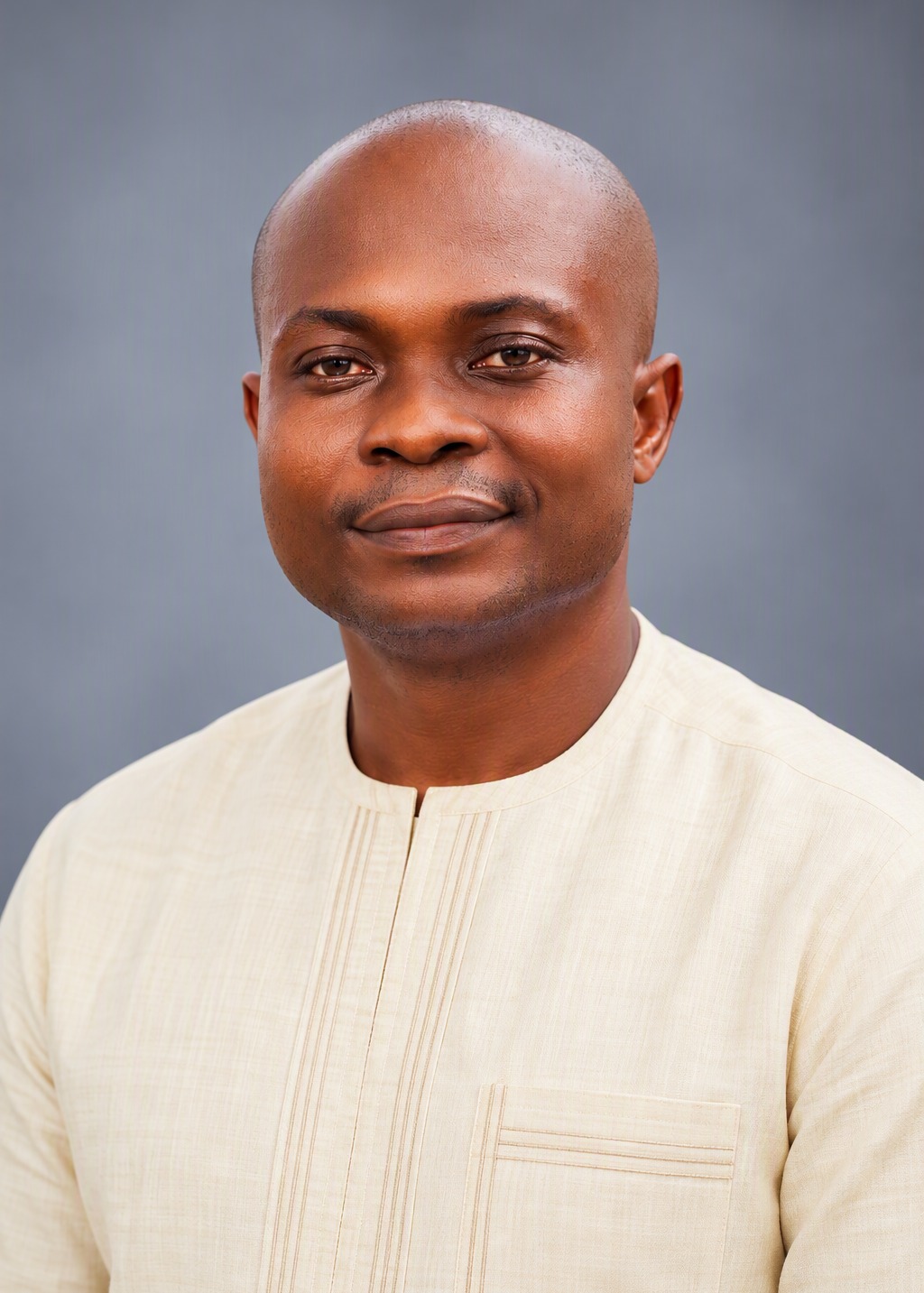
Photograph of the author, Godson Aloryito

Godson Aloryito (PhD), is an early-career researcher with the Promoting Effective Policies for Women’s Economic Empowerment in Ghana (WEE-Ghana) project at the University of Ghana. Within the project, his work focuses on government spending as a component of economic-sector policies, examining how policy intentions and their intended or unintended consequences shape the economic fortunes of Ghanaian women. His work contributes to the project’s broader efforts to generate evidence to inform gender-responsive policymaking and advance women’s economic empowerment in Ghana.
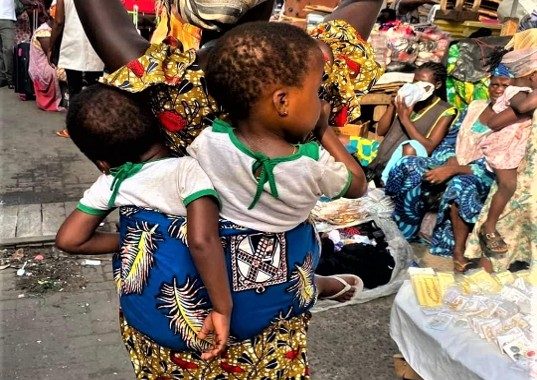
Photo: Irene Obeng, A woman from Ghana selling water at Makola, Accra (2022). Wikimedia Commons. CC BY-SA 4.0

When Women Keep Filling the Gaps, Who Sees the Care Deficit?

From women’s resilience to a more equitable care economy

It is often said that women are natural caregivers. But what if what we call women’s resilience is actually the quiet absorption of a care deficit? Women care for children, tend to sick family members, support older relatives and keep households running, often without these responsibilities being recognised as work or sufficiently reflected in policy and public provision. Because women continue to find ways to make things work, gaps in care provision can remain largely out of sight. The household functions, the child is cared for, the older person is attended to—and the cost of making all of this possible is quietly absorbed, often by women.

This tension came into sharp focus during WEE-Ghana’s August reading session, where the team reflected on care and its implications for women’s economic empowerment. The discussion was anchored in two complementary readings: Rabe’s (2017) examination of care, family policy and social citizenship in South Africa, and UN Women’s (2023) collection of case studies on recognising, reducing and redistributing unpaid care work in West and Central Africa. Together, the readings prompted reflection on how care is organised, who carries its costs and what role public policy can play in creating a more equitable care economy.

When resilience conceals the deficit

A recurring theme throughout the discussion was the extent to which women’s unpaid labour continues to compensate for gaps in care provision. As one team member put it, “We don’t really see the care deficits, and when women continually step in to meet care needs, households and communities continue to function, making it possible for the wider system to appear more adequate than it may actually be.” Yet this resilience has limits. The discussion recognised that women cannot indefinitely absorb unmet care needs without consequences. “You simply can’t stretch care beyond a certain limit,” reflected another team member, “and when women become exhausted, the deficits that their labour had previously concealed become more visible.”

This has direct implications for women’s economic empowerment. The team’s reflection highlighted unpaid care as a significant contributor to women’s time poverty and constraints on their participation in economic activities. A woman may have access to an educational, employment or entrepreneurial opportunity, but her ability to take it up and sustain her participation may depend on who cares for the children, supports an older relative, cares for a sick family member, or performs the daily work of maintaining the household. The question, therefore, is not simply whether women can continue to cope with care. It is what their continued coping is costing them.

Rethinking who is responsible for care

Rabe’s (2017) discussion of social citizenship provided an important lens for this question. If care is understood primarily as a private family responsibility, responsibility for meeting care needs remains largely within households. A social citizenship perspective, however, invites us to consider the roles and responsibilities of the state, family, market and community in ensuring that people can access the care they need.

This prompted the team to consider whether care should be understood more explicitly as a public good and a matter of public responsibility. Such a shift does not necessarily mean that the state must provide every care service directly. Rather, the state could play multiple roles: as a provider of essential services, a trainer of a professional care workforce, a regulator of market-based care and a coordinator of a more coherent care system.

The discussion of professional caregiving illustrated this possibility. Ghana already has an emerging demand for people to care for older persons, children with disabilities and others requiring support. This raises the possibility of investing in training and professionalising care work, potentially creating decent employment while also expanding access to quality care.
The knowledge sharing session amongst the WEE-Ghana team, also challenged the tendency to focus only on those who receive care. Caregivers deserved as much attention as the persons with disabilities they support. Recognising the care recipient without recognising the person providing the care risks leaving a significant part of the care burden invisible.

From isolated interventions to a care system

The UN Women (2023) toolkit brings together case studies and examples from across Africa and beyond—including Cabo Verde, Senegal, Kenya, Ghana, Rwanda, South Africa and Uruguay, as well as examples from Latin America and Asia-Pacific. Two examples were particularly useful to our discussion because they illustrate different ways of responding to unpaid care. The Senegal case study demonstrated that reducing unpaid care does not always mean establishing conventional care services. Investments in water, energy and labour-saving technologies can also reduce the time women spend on everyday domestic tasks. The discussion connected these examples to the time women in parts of Ghana spend collecting water and fuelwood—time that can constrain their participation in economic activity.

The Makola Market example offered another perspective. Women traders have developed a cooperative childcare arrangement to help them manage their economic activities with their caregiving responsibilities. The example is significant because it demonstrates that communities are not simply waiting for solutions; women are already creating them. The question is how public policy can recognise, strengthen and sustainably support such initiatives without leaving communities—and particularly women—to carry the responsibility alone.

This becomes particularly important because the discussion pointed to a broader gap in Ghana’s policy landscape- the non-existence of a comprehensive care policy. The challenge, therefore, may not be the complete absence of care-related interventions, but the lack of a sufficiently coherent framework that connects them.

The comparative experiences in the UN Women reading illustrate what a more systemic approach can entail: bringing together care services, workforce development, financing, regulation and coordination. For Ghana, the lesson is not necessarily to reproduce another country’s model, but to consider how existing interventions could be better connected within a comprehensive care framework, supported by deliberate financing and stronger institutional coordination.

What does this mean for women’s economic empowerment?

The August deliberation ultimately brought care back to a central concern of WEE-Ghana’s work: women’s ability to participate meaningfully in economic life. If unpaid care contributes significantly to women’s time poverty, then economic empowerment cannot be addressed only through access to jobs, markets, finance, education or enterprise opportunities. It must also consider the unpaid responsibilities that determine whether women have the time and freedom to take advantage of those opportunities.
The discussion therefore invites a shift in perspective. Rather than asking only how women can better manage the care responsibilities they already carry, we might ask how responsibility for care can be organised differently—across households, communities, markets and the state. Perhaps the more uncomfortable truth about resilience is how much women are continually required to stretch themselves to make care arrangements work. But can women continue to stretch in perpetuity? The challenge for policy is therefore not simply to recognise women’s care work, but to reduce the amount of unpaid care they are required to perform and redistribute responsibility for care more equitably across households, communities, markets and the state.

This reflection forms part of WEE-Ghana’s efforts to strengthen knowledge sharing and document key insights emerging from the project’s internal learning and reflection activities.


References

Obeng, I. (2022). A woman from Ghana selling water at Makola, Accra [Photograph].

Wikimedia Commons.

https://commons.wikimedia.org/wiki/File:A_woman_from_Ghana_selling_water.jpg

Rabe, M. (2017). Care, family policy and social citizenship in South Africa. Journal of

     Comparative Family Studies, 48(3), 327–338. https://doi.org/10.3138/jcfs.48.3.327

UN Women. (2023). Recognising, reducing and redistributing unpaid care work: Selected

     case studies to support reform in West and Central Africa. https://africa.unwomen.org/