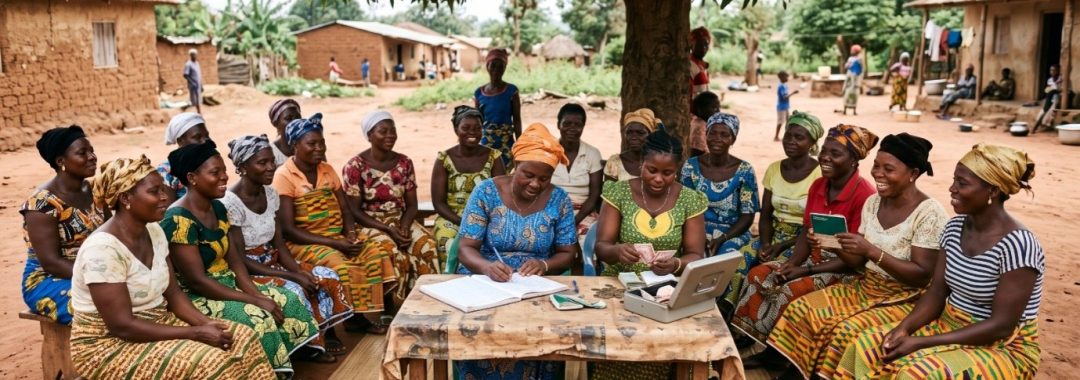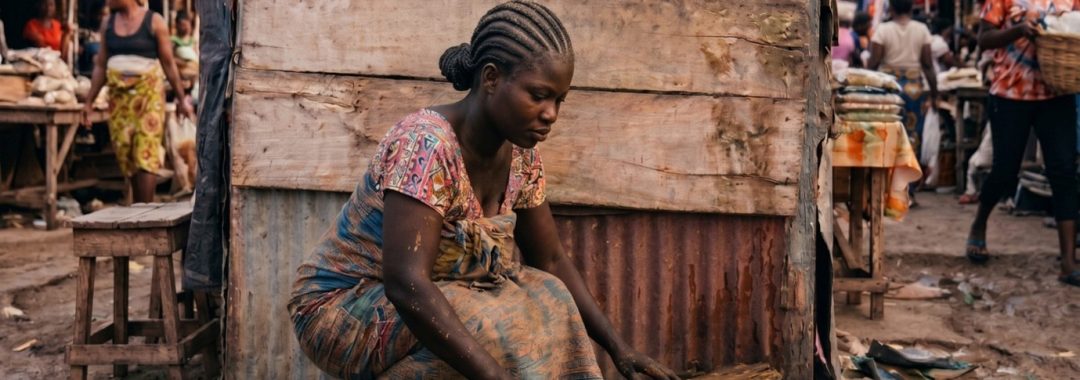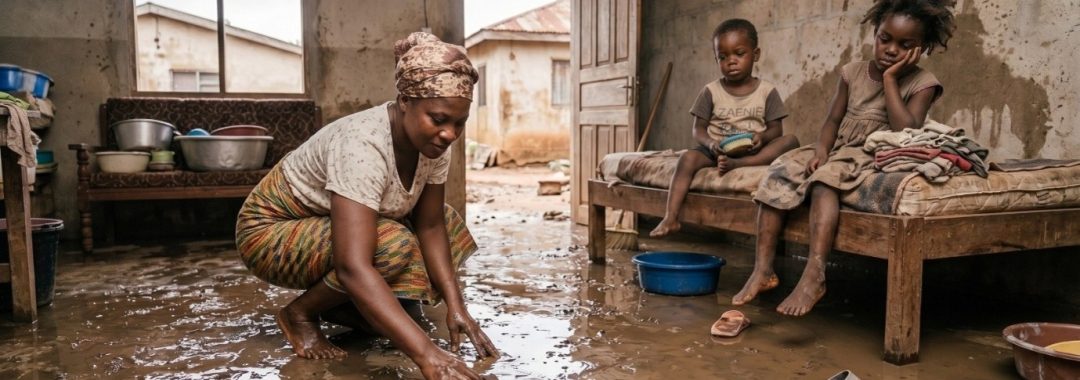
Imagine Ama
After years of working, saving and building her qualifications, Ama receives news she has been hoping for: she has won a scholarship to pursue a master’s degree abroad. It is the kind of opportunity that can change a career and perhaps the economic trajectory of her family. But Ama is also a mother. Before she can celebrate, another set of questions begins to crowd her mind. Who will care for the children while she is away? Who will take them to school, care for them when they are sick and manage the everyday demands of childcare? Her husband is there, of course, but how will childcare responsibilities actually be shared while Ama is away? Will the responsibility be understood as something the family must organise around her absence, or as something both parents must reorganise around? If someone else takes over, who bears the cost of that care?
Now imagine that Ama is told she can take her family with her. The questions change. Should public funds pay for that? And if they do not, can Ama realistically take up the opportunity on the same terms as someone without those responsibilities? This is where a seemingly straightforward scholarship story opens into a much bigger question about women’s economic empowerment: what happens when the opportunity to advance economically meets the childcare responsibilities that women are still expected to carry?
The recent debate surrounding Ghana’s scholarship programme has understandably prompted questions about public expenditure, accountability and the appropriate limits of state support. But beneath those questions lies another policy issue that is much less visible: care.
A scholarship creates an opportunity. Care can determine whether it is usable.
Education is widely recognised as an investment in human capital, and a postgraduate scholarship can provide women with qualifications, skills and credentials that strengthen their prospects for employment, career progression and income. Yet, an opportunity is not necessarily accessible simply because it has been offered. It also requires time, and time is not distributed equally. WEE-Ghana’s work on care shows that care itself is work. It requires time, effort and resources and can take place within households, workplaces, markets, public spaces and voluntary settings. Some care work is paid; much of it is not. Ghana’s available time-use evidence, although dated, illustrates the gendered distribution of unpaid care: data from 2009 indicated that women spent approximately 3.78 hours a day on unpaid care work, compared with 1.1 hours for men. While these figures are by no means an indication of Ghana’s care economy, they illustrate an enduring policy concern – women’s economic opportunities are pursued within a distribution of time that is already unequal. Like Ama, when women receive a scholarship, they do not receive it as individuals detached from the rest of their lives. They receive it as mothers, wives, caregivers or household members whose time may already be heavily committed to others. That changes the meaning of the opportunity.
Childcare does not disappear when Ama leaves
Suppose Ama decides to accept the scholarship and leave her children in Ghana. Her childcare responsibilities do not necessarily disappear; someone must still get the children ready for school, prepare meals, respond when a child is sick and be available when something unexpected happens. The childcare has simply been reorganised. Perhaps Ama’s mother takes over, her sister does, or another woman in the extended family steps in. Her husband may also assume more responsibility for the children, but in households where childcare continues to be understood primarily as women’s responsibility, his presence does not necessarily mean that the care burden is redistributed equally. Another woman may reduce her own paid work to fill the gap, or the family may pay someone else to provide care.
In each case, the question is not simply who is available to help Ama, but who is expected to take responsibility for childcare when a woman takes up an economic opportunity. This matters because WEE-Ghana’s work draws attention not only to the amount of care being performed, but also to how its burden is distributed. Gender norms continue to shape who is expected to provide care, even within households where men are present. An economic opportunity for one woman can therefore sometimes depend on the unpaid labour of another. That is an uncomfortable but important part of the conversation.
Childcare is only one part of the wider care landscape. WEE-Ghana’s work recognises care more broadly as the time, effort and resources required to support children, older people, sick or dependent family members and households. Looking at Ama’s childcare dilemma therefore opens a wider question: when women pursue educational and economic opportunities, who takes on the other forms of care and domestic work that continue around them?
And care can follow Ama even when she travels
There is another possibility: Ama takes her children with her. Her family remains together and she can continue caring for them, but the childcare question becomes a financial one. Travel, accommodation, food, schooling, healthcare and everyday living all carry costs. If public funds cover the additional costs, questions of equity, affordability and accountability arise; if they do not, a woman with children may face substantially greater private costs in taking up the same educational opportunity.
Neither side of that dilemma can simply be wished away, and that is precisely why care deserves to be treated as a public policy issue rather than a private family matter. The question is larger than whether Ama travels alone or with her family. It is about whether women can take up educational and economic opportunities without the care responsibilities surrounding them becoming an additional burden they must privately resolve before those opportunities become viable. The scholarship may be the opportunity, but childcare can shape whether that opportunity is one a woman can realistically take up. The scholarship debate therefore leaves us with a question that reaches well beyond the individual beneficiary: how can women pursue educational and economic opportunities without childcare and other care responsibilities becoming invisible barriers to participation?
Ama’s story doesn’t end here. Our next instalment takes us deeper into the questions raised by care and scholarship opportunities. Watch this space for in-depth commentary in Instalment 2 of our four-part series, Care and Scholarships.
Ama is a composite character used to illustrate the care-related policy questions raised by the scholarship debate; she does not represent any individual scholarship beneficiary.