
The Hidden Cost of Coping
When a mother leaves home early to take a child to school before going to work, when a grandmother steps in to care for grandchildren, when a daughter reduces her working hours to look after an ageing parent, or when a woman quietly turns down an opportunity because there is nobody else to provide the care her family needs, these decisions can appear personal. They may be described as family arrangements, individual choices or sacrifices made for loved ones. But taken together, they reveal something larger about how care is organised in society.
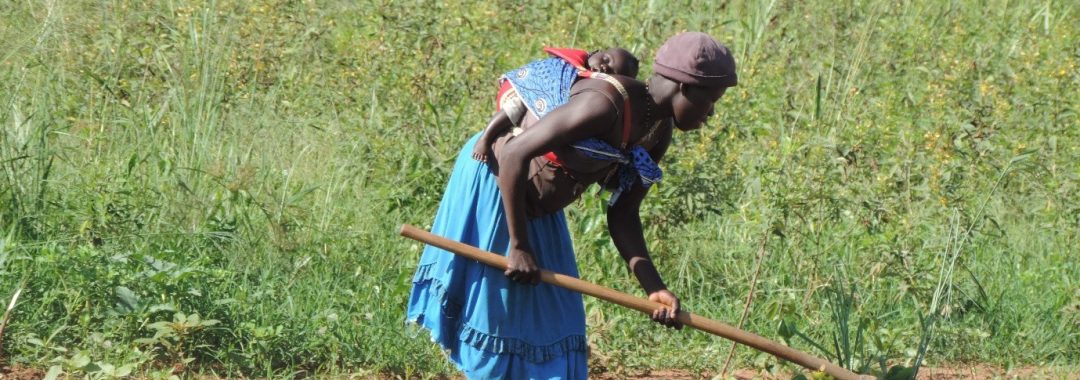
WEE-Ghana’s work has highlighted a striking paradox: women often stretch themselves to provide care that the state or the market is not providing. In doing so, it becomes difficult to see the gaps in care provision. As the project captured through its engagement with stakeholders, “we don’t really see the care deficits” because women continue to stretch themselves to fill them. What may look like resilience at household level can therefore conceal a much deeper systemic gap: the problem has not disappeared; its costs have simply been absorbed within households, often through women’s time and labour.
The implications become clearer when we return to Ama, the woman at the centre of our scholarship story. Suppose she accepts her opportunity to study abroad and leaves her children in Ghana. Her children still need to be cared for. Her mother may step in. Her sister may help. Her husband may reorganise his own responsibilities. Another relative may take on the role. Or the family may pay someone to provide care. Each arrangement solves an immediate problem, but each also transfers the responsibility somewhere else. If the person taking over is another woman, her own time and economic activity may be affected. If care is purchased, the household assumes an additional financial cost. If neither option is available, Ama may have to reconsider the opportunity itself. The point is not that families should stop caring for one another. It is that when households repeatedly absorb gaps in care provision, the economic cost of those gaps does not disappear; it is redistributed, often invisibly.
When Care Takes Time, Opportunity Costs Follow
Care constraints do not always look like childcare. They can be embedded in the everyday work required to keep households functioning. WEE-Ghana’s work has drawn attention to the less visible ways in which domestic responsibilities consume women’s time. The project’s engagement highlighted how “the issue of water and the issue of fuel firewood takes huge chunks of hours away from women and affects the ability to participate in economic activity.” The broader point is important: time devoted to necessary unpaid work is time that cannot simultaneously be devoted to paid employment, enterprise, education or other opportunities.
This is why the question of care cannot be reduced to whether women are working or whether they have access to economic opportunities. It must also consider what happens around those opportunities. WEE-Ghana’s work recognises that care involves time, effort and resources and takes place across households, markets, public institutions and voluntary settings. Much of it remains unpaid. That unpaid component is particularly significant because it can obscure the extent to which households are effectively subsidising the wider economy through women’s time. Women’s unpaid care work (childcare, eldercare, care for the sick, preparing meals, cleaning the home) is critical for the maintenance and quality of the current and future workforce. The profitability of firms and businesses depends on the quality of the workforce as does the productivity of the economy. Women’s unpaid care labour is therefore a subsidy to firms and businesses and to the economy. If a monetary value were to be placed on women’s unpaid care work, the wages paid to workers would have to be higher to cover the total cost of maintaining labour on a daily basis. A woman who remains at home to care for or bring up a child is not simply “not working”. A daughter who leaves paid employment to care for an ageing parent is not simply making a private family choice. Their time has been redirected towards work that remains necessary whether or not it is recognised as economic activity.
The problem becomes even more pronounced when care needs are intensive or prolonged. During WEE-Ghana’s work, the project has recognised that care cannot simply be stretched indefinitely. As responsibilities accumulate, stress increases and care deficits can emerge. For some households, this may mean reduced working hours or lost income; for others, it may mean relying increasingly on relatives, neighbours or informal arrangements. Families caring for persons with severe disabilities may face particularly demanding circumstances, with caregivers requiring substantial time even when they are themselves economically active. The capacity of households to cope should therefore not be mistaken for evidence that the underlying system is adequate.
When Private Coping Becomes a Systemic Problem
There is also a danger in celebrating women’s ability to cope without asking what that coping requires. If women continually adjust their employment, businesses, education and personal time around gaps in care provision, the flexibility of the household can become a substitute for institutional responsibility. The burden is private and takes its toll on women’s bodies. It depletes them of good health. This depletion is particularly evident when women combine income-generating work with unpaid care work. A woman may spend the day running a business or earning an income and then return home to prepare meals, clean the household and care for children, an ageing parent or a sick family member. The demands of both forms of work are borne by the same person, and the toll extends beyond her economic circumstances to her physical, mental and emotional wellbeing. Over time, this depletion can be reflected in lower incomes, constrained labour-force participation, interrupted careers, reduced productivity and fewer opportunities to build economic security.
This brings the scholarship debate into sharper focus. The question raised by Ama’s situation is not simply whether a scholarship should finance dependants. Nor is it whether women with children should be expected to make private arrangements. The deeper issue is what the existence of these dilemmas tells us about the care arrangements surrounding women’s economic opportunities. When women must continually solve care problems privately in order to participate in education and employment, what appears to be an individual challenge may actually be a systemic gap. And once we see that gap, another question follows: what would it take to move from households continually finding ways to cope to a care system deliberately designed to support them?
Ama is a composite character used in this series to illustrate the policy questions raised by the scholarship debate; she does not represent any individual scholarship beneficiary.