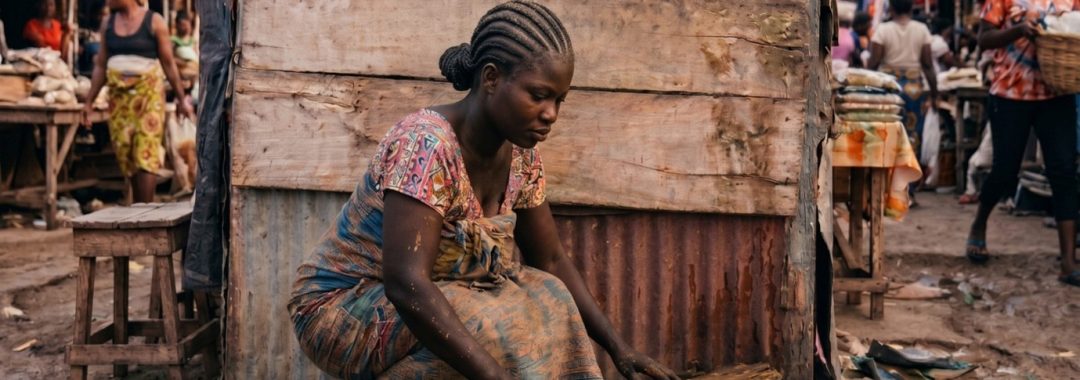
Photo: Flood-damaged markets disrupt women's livelihoods and incomes

Beyond the Floodwaters: Why Climate Disasters Are Women’s Economic Empowerment Issues

Last week’s commentary explored how climate disasters expose the often-invisible burden of unpaid care work. This week, we examine another consequence that receives far less attention: the fragility of women’s livelihoods.

Floods Expose the Fragility of Women’s Livelihoods

Floodwaters do not simply interrupt transport or damage infrastructure: they interrupt livelihoods.
For many women working in Ghana’s informal economy, every day that a market remains inaccessible, a roadside stall stays closed or a farm becomes unreachable represents income that can never be recovered. Unlike salaried employment, many informal enterprises generate earnings only when business continues uninterrupted. Climate shocks therefore translate almost immediately into lost income, depleted savings and heightened economic insecurity.

This reality featured prominently throughout WEE-Ghana’s research on women’s employment and underscores why resilient livelihoods are central to women’s economic empowerment.
Rather than describing livelihoods characterised by steady earnings and predictable growth, researchers consistently encountered women navigating continual financial uncertainty. Women operating small farms, processing businesses and market enterprises often found it difficult to distinguish business income from household expenditure because earnings flowed almost immediately back into sustaining both. As one researcher observed after analysing the fieldwork, women in vulnerable employment frequently “have difficulty estimating incomes” because what they earn is continually reinvested into keeping their enterprises—and their households—afloat.

That observation reveals an economic reality that conventional statistics rarely capture. Income is not something accumulated over time. It is something continually managed.
Today’s earnings purchase tomorrow’s stock. They pay casual labourers, cover transport costs, finance children’s education, meet healthcare expenses and keep small businesses operating. Under these conditions, accumulating meaningful financial reserves becomes exceptionally difficult.

Viewed from this perspective, floods become far more than temporary disruptions.
A flooded marketplace is not simply a commercial space that cannot open for business. It represents unsold stock, interrupted supply chains, customers who stay away and household expenses that continue regardless of whether income is earned. For women operating on already narrow margins, even a few days of disruption can trigger financial consequences that persist long after the floodwaters have disappeared.

The same economic precarity also shapes women’s ability to plan for the future.
During one of its series of stakeholder engagements on social protection, a participant explained why participation in Ghana’s pension system often remains beyond the reach of many women in informal employment. “For the SSNIT scheme you need money to do that and I do not always have money,” she recounted an informal worker’s perspective about having a social security nest-egg.
The simplicity of that statement is striking. It is not merely an explanation for low pension enrolment. It illustrates how persistent economic insecurity constrains long-term resilience itself. When today’s income is barely sufficient to meet today’s needs, preparing for tomorrow—or for the next climate-related emergency—becomes extraordinarily difficult.

Importantly, WEE-Ghana’s research suggests that the solution extends beyond encouraging more women to become entrepreneurs or participate in the labour market. Employment alone is not enough. Women’s economic empowerment also depends on whether those livelihoods are sufficiently resilient to withstand increasingly frequent climate-related disruptions without collapsing under their weight.
Climate resilience, therefore, is not only about protecting infrastructure. It is equally about protecting the livelihoods that infrastructure supports.
As climate change intensifies, this distinction becomes increasingly important. Roads, markets and transport systems matter not simply because they are physical assets, but because they enable millions of women to earn an income, sustain their families and contribute to local economies. When those systems fail, the economic consequences are borne disproportionately by those whose livelihoods depend upon them most.

The challenge for policy, then, is not only to rebuild damaged infrastructure after disasters occur. It is to strengthen the economic resilience of women’s livelihoods before the next flood arrives.

Looking Ahead
The resilience of women’s livelihoods depends not only on individual effort but also on the quality of public investment. In the next instalment of the WEE-Ghana policy lens, we examine why resilience is built through public spending—not only through emergency response after disaster strikes.
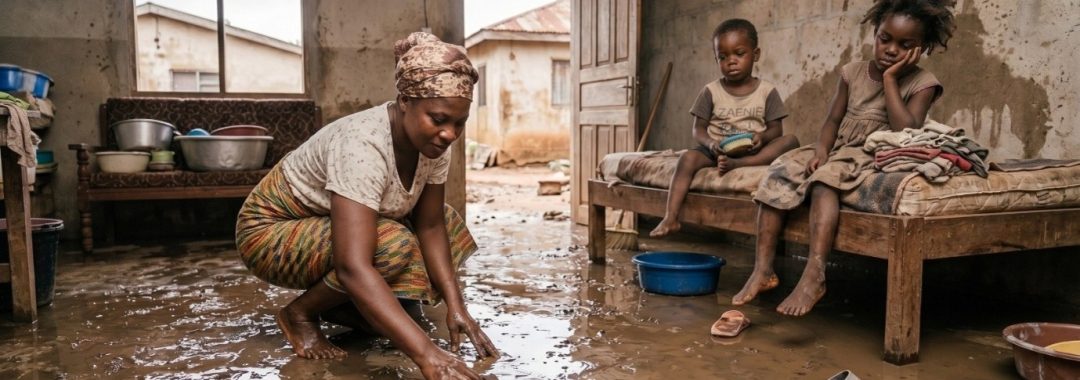

photo description: Women shoulder much of the unpaid care and recovery work of flood

Beyond the Floodwaters: Why Climate Disasters Are Women’s Economic Empowerment Issues

What does a recent call for gender-responsive flood policies reveal about women’s economic empowerment? Through the lens of WEE-Ghana’s research, far more than might first appear.

Every rainy season, flooding returns to Ghana’s national conversation. Images of submerged homes, impassable roads, collapsed drains and displaced families dominate news bulletins and social media feeds. This year has been no different.

In a Daily Graphic feature published on 25 June 2026, journalist Biiya Mukusah Ali reported on a call by the Executive Director of the African Centre for Urban Resilience Planning and Inclusive Governance (ACURPIG), Gifty Nyarko, for gender-responsive flood policies that better protect women and children. The Executive Director argued that women often shoulder the greatest burden when floods occur—not only because they are more exposed to risk, but because they are expected to care for children, support elderly relatives, secure food and water, salvage household belongings and rebuild family livelihoods in the aftermath of disasters.

The article draws attention to an important reality: climate disasters are never experienced equally. Existing social and economic inequalities shape who is most exposed, who recovers first and who bears the invisible costs long after the floodwaters recede.

Yet if we stop there, we risk missing the larger story.

Over the past three years, the WEE-Ghana Project has examined how public policy shapes women’s economic opportunities and outcomes. Viewed through that body of research, the Daily Graphic story becomes more than a report on flood preparedness. It becomes an entry point for understanding how climate resilience intersects with women’s economic empowerment.

Over four instalments, this policy lens series explores that story from four perspectives. We begin where the burden of every disaster often begins—but is least visible: care.

When the Waters Rise, Care Work Rises Too

The first images that accompany floods are usually physical: submerged roads, damaged homes, collapsed drains and stranded commuters. Less visible are the responsibilities that begin almost immediately after the waters rise.

Children still need to be cared for when schools close. Elderly relatives still require support. Meals still need to be prepared, even when kitchens have flooded. Homes must be cleaned, belongings salvaged and families reassured while communities begin the slow process of recovery.

More often than not, that work falls to women.  While Gifty Nyarko’s call for gender-responsive flood policies recognises that women and children experience climate disasters differently, WEE-Ghana’s research suggests an equally important question: what does this tell us about how public policy understands care itself?

Across the project’s stakeholder engagements, one message surfaced repeatedly. Care cannot continue to be treated as a private household responsibility with little relevance to economic policy. Participants instead argued that care is foundational to economic planning because it sustains the workforce on which every economy depends. Care enables economies to function.

Just as roads enable trade and electricity powers businesses, care enables parents to work, entrepreneurs to run their enterprises and communities to remain productive. Yet because much of this work takes place within households—and is performed predominantly by women—it often remains invisible in economic planning.

Stakeholders challenged the assumption that caregiving belongs naturally to women and argued instead that care should be recognised as a shared societal responsibility requiring deliberate public investment, supportive institutions and a more equitable distribution of caregiving between women and men.  Indeed, floods expose why these conversations matter.

Every additional hour spent caring for displaced children, supporting sick relatives or restoring flood-damaged homes is an hour that cannot be devoted to farming, trading or running a small business. Climate disasters do not create this burden. They magnify one that already exists.

Recognising care as economic infrastructure fundamentally changes how we think about resilience. It shifts the conversation from responding to disasters towards investing in the systems that allow women—and by extension households, communities and economies—to recover more quickly and more equitably.

Looking Ahead

The flood story does not end with care. When homes, roads and markets are disrupted, livelihoods are disrupted too.

In the next instalment of the WEE-Ghana policy lens, we examine how climate disasters expose the fragility of women’s livelihoods—and why economic resilience requires more than rebuilding infrastructure.

From community priorities to budget realities

When Planning and Budgets Do Not Speak the Same Language: Reflections from WEE-Ghana’s Third Reading Session of 2026

On 18th June 2026, members of the WEE-Ghana project team convened for the third reading session of the year. The discussion was anchored on two articles: Buyana’s (2009) examination of gender-responsive local government budgeting in Uganda and Cabannes and Ming’s (2013) analysis of participatory budgeting in Chengdu, China. Together, the readings prompted a rich conversation on participation, budgeting, local governance and the conditions necessary for meaningful inclusion in development decision-making.
Although the studies emerged from different contexts, participants identified several issues that resonate strongly with ongoing debates in Ghana. The discussion explored the relationship between planning and budgeting, the extent to which citizens are able to influence public resource allocation, and the challenges of ensuring that women’s priorities are reflected in local development processes.

The Planning-Budget Disconnect

A recurring theme throughout the discussion was the gap that can emerge between participatory planning processes and actual budget decisions. Team members reflected on Buyana’s (2009) argument that local budgeting processes may not always reflect the lived realities and priorities expressed by community members, particularly women, even where mechanisms for participation formally exist.

The conversation drew parallels with experiences in Ghana, where communities may be consulted during planning processes but have limited influence over the allocation of resources once funding decisions become constrained by institutional procedures, earmarked funding arrangements or competing priorities.

Participation Beyond Consultation

The discussion also explored what meaningful participation looks like in practice. Drawing on the Chengdu experience, participants reflected on whether participatory budgeting and local decision-making processes necessarily result in more inclusive and gender-responsive outcomes.

One reflection centred on whether women’s interests are actively sought and incorporated into local planning and budgeting processes. Participants questioned whether greater local control over resources would automatically translate into better outcomes for women, noting that local decision-making structures can reproduce existing inequalities if deliberate attention is not paid to whose voices are heard and whose priorities shape development decisions.

The discussion also prompted reflection on Ghana’s decentralisation framework. While mechanisms such as community action plans and public hearings are intended to provide opportunities for citizen participation, participants observed that community priorities identified through these processes may not always influence final budget decisions. This raised broader questions about the distinction between participation as a procedural requirement and participation as a meaningful influence on decision-making.

More broadly, the conversation highlighted that participation is not simply a matter of creating spaces for engagement. Effective participation requires mechanisms that enable citizens’ priorities to influence decisions and produce visible outcomes. Particular attention was given to how women can participate meaningfully in processes that have historically been shaped by unequal power relations and structural barriers.

This recap forms part of WEE-Ghana’s efforts to strengthen knowledge sharing and document key insights emerging from the project’s internal learning and reflection activities.

Patricia Blankson-Akakpo reflects on digitalisation and financial inclusion

Reflections from NETRIGHT on Digitalisation and Financial Inclusion

“Without a gender lens, policies designed to promote financial inclusion risk overlooking the distinct financial realities and needs of the people they are intended to serve.”

This observation by Patricia Blankson-Akakpo, Head of Secretariat of the Network for Women’s Rights in Ghana (NETRIGHT), a partner organisation in the WEE-Ghana Project, draws attention to a critical issue in discussions on digitalisation and financial inclusion: the need to understand how policies affect women and men differently.
As Ghana continues to embrace digital technologies and expand access to financial services, discussions around financial inclusion often focus on increasing access. Yet, as Patricia reminds us, access alone is not enough. The real question is whether the systems, services, and policies being developed are responding to the different realities and needs of the people they are intended to serve. Indeed, this is where a gender lens becomes essential.
When policies are designed without considering how women and men experience economic opportunities differently, they risk missing the mark. What appears inclusive on paper may fail to address the specific barriers that prevent women from fully participating in and benefiting from financial systems.

Patricia’s perspective resonates strongly with conversations emerging from WEE-Ghana’s recent policy dialogue on digitalisation and financial inclusion, which brought together diverse stakeholders to reflect on what the project’s research means for advancing women’s economic empowerment in Ghana.
Findings from the research presented at the convening showed that although the nation has made significant progress in digitalisation and financial inclusion, access to and benefits from these advances remain uneven. Across the study communities, participants reported challenges including unreliable infrastructure, limited digital literacy, high transaction costs, concerns about fraud, and unequal access to digital tools and services. The findings also revealed that these barriers often affected women more profoundly, limiting their ability to fully participate in an increasingly digital economy.

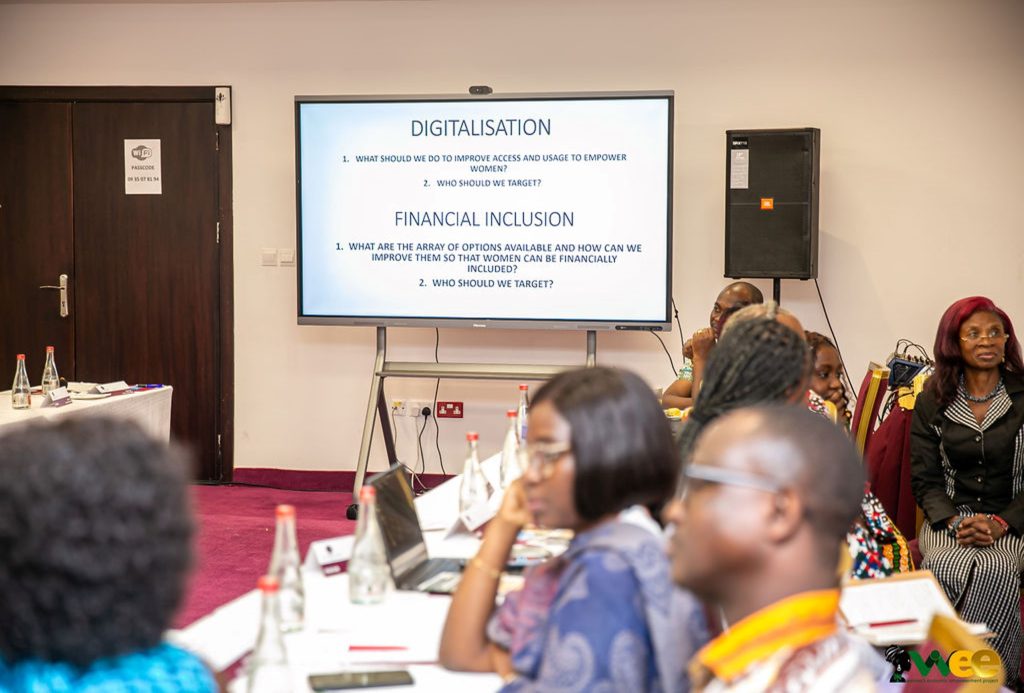
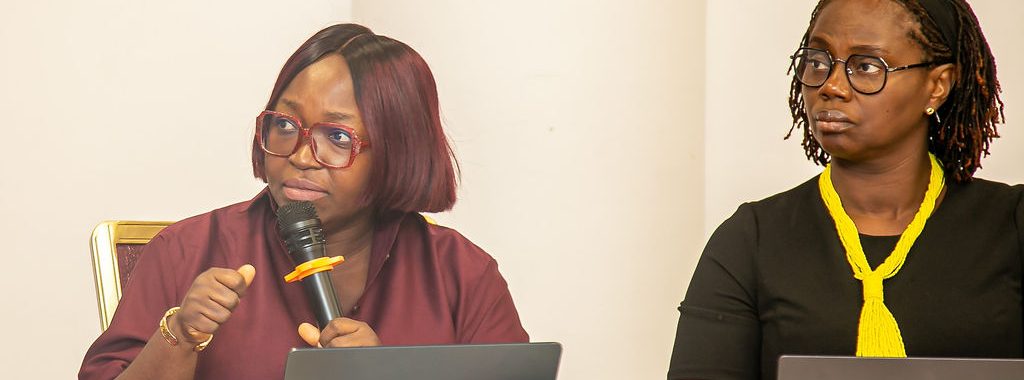
Stakeholders shared perspectives on financial inclusion

Stakeholders shared perspectives on financial inclusion

Building on these findings, participants reflected on how these challenges manifest in everyday life and what they mean for efforts to promote inclusive digital and financial systems. For older women and women with limited formal education, navigating digital platforms can be particularly difficult. Many rely on family members, friends, or service providers to help them complete transactions and access services that are increasingly being delivered through digital channels. In such situations, the promise of digital inclusion does not always translate into genuine empowerment.

A case in point is how financial inclusion is often discussed in terms of technology, banking products, and digital platforms. However, the experiences shared during the research remind us that inclusion is ultimately about people. It is about whether women can access and use services independently, whether they feel safe using them, whether they can afford them, and whether those services help them improve their economic circumstances.

Key themes from the policy dialogue

Key themes from the policy dialogue

As the nation continues its digital transformation journey, ensuring that these questions remain central to policy discussions will be critical. It also puts into sharp focus the importance of the work being undertaken by NETRIGHT within the WEE-Ghana Project.

NETRIGHT’s contribution centres on advancing gender-responsive advocacy aimed at addressing the structural and systemic barriers that continue to affect women’s economic empowerment. Patricia notes, “Once findings are shared, NETRIGHT engages with them and uses them to strengthen the capacity of a core group of civil society organisations, particularly women’s rights organisations working in the area of women’s economic empowerment.” By equipping these organisations with relevant knowledge and the skill to craft advocacy messages, NETRIGHT seeks to contribute to policy conversations that are not only grounded in evidence, but also result in meaningful and gender-responsive reforms.

Patricia’s reflection serves as a timely reminder that Ghana’s financial inclusion narrative requires a rethink—one that goes beyond expanding access to designing systems and policies that recognise and respond to the different realities women face. Only then can financial inclusion fulfil its promise as a meaningful pathway to women’s economic empowerment.

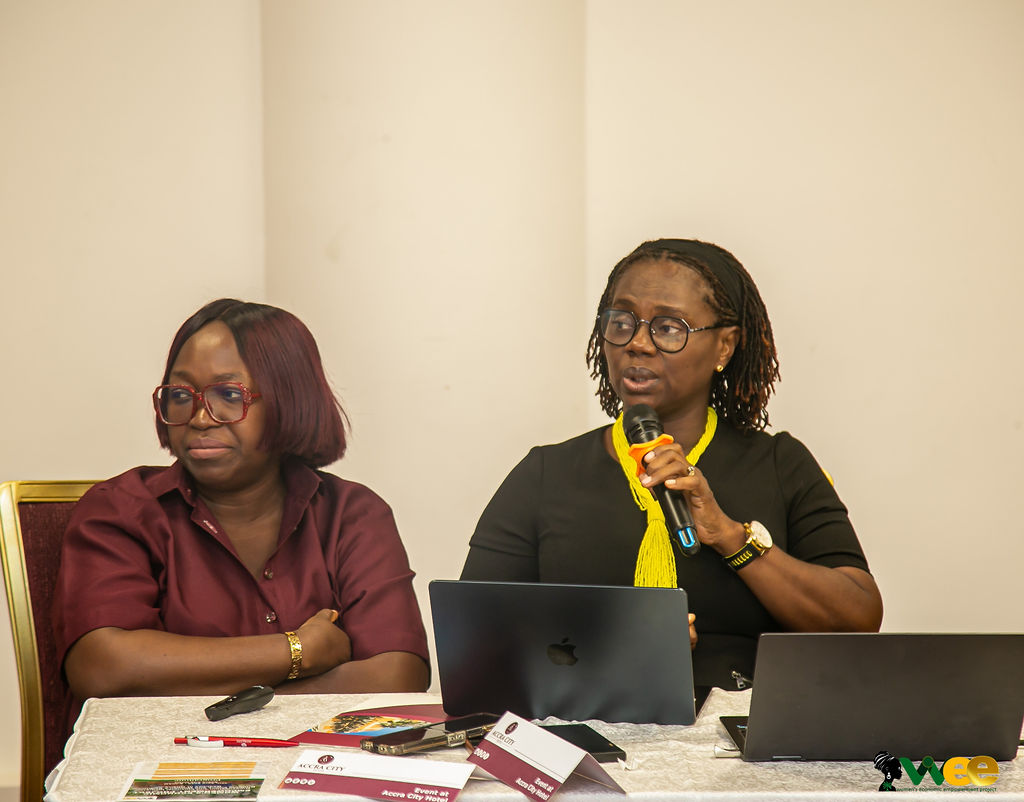
Dr. Ampah leading the presentation on digitalisation

Ghana’s Digitalisation Drive Delivers Uneven Gains in Financial Inclusion

Ghana’s digitalisation drive is delivering only partial gains in financial inclusion, as gaps in electricity, internet access and basic infrastructure continue to limit how—and for whom—digital financial services work.

This emerged at the WEE-Ghana policy convening on digitalisation and financial inclusion, held in Accra on April 30. The event brought together stakeholders from academia, government, regulatory bodies, civil society and the development sector. It also created space to bridge policy and women’s economic realities, following field research that showed how financial inclusion and digitalisation policies are shaping women’s livelihoods in both intended and unintended ways.

Sharing findings from the research, an early-career scholar, Dr. Geraldine Ampah, highlighted that national digitalisation efforts were often built on assumptions that do not reflect realities on the ground.
“Digitalisation… is based on the assumption that electricity, water and internet infrastructure exist across the country—and that is not the case.”

Dr.-Aning-Oppong-Duah-sharing-insights-on-financial-inclusion.

Dr. Aning Oppong-Duah sharing insights on financial inclusion

She further noted, that although national data point to high levels of electrification and growing internet penetration, “Our field evidence reveals there are still some communities that do not have electricity, and more importantly, electricity in Ghana is not stable. The same is true for the internet: some communities lack connectivity, and even where it exists, the internet is not stable—network failures regularly disrupt essential services.”

Turning to financial inclusion, a co-researcher, Dr. Ama Aning Oppong-Duah outlined two key trends emerging from the fieldwork. While access to mobile money and other digital services had expanded, she noted that usage was shaped by cost and reliability concerns, with transaction charges reducing the value of already limited incomes.

“Yes, mobile money particularly has significantly improved the ease of transactions, but charges are too much… just moving the money around, it keeps reducing.”
More fundamentally, she observed that access to financial services did not necessarily translate into improved economic outcomes, as many users lacked the income base needed to fully benefit from these systems.

Despite these, the study found that digital financial services—particularly mobile money—have significantly improved the ease of transactions, enabling users to send, receive and store money more conveniently. The discussions that followed during plenary surfaced deeper structural issues that went beyond access to digital tools. Participants stressed that digital solutions could not substitute for basic infrastructure, but must instead build on it.

One noted, “We need to improve access first, once these fundamental things are there, we can layer digitalisation on top of it, because it [access] is foundational.”
Among others, there were calls for more targeted institutional action to bridge connectivity gaps in underserved communities and enable private sector participation, as well as addressing structural constraints, such as limited access to affordable credit which narrowed the range of viable options available to users.

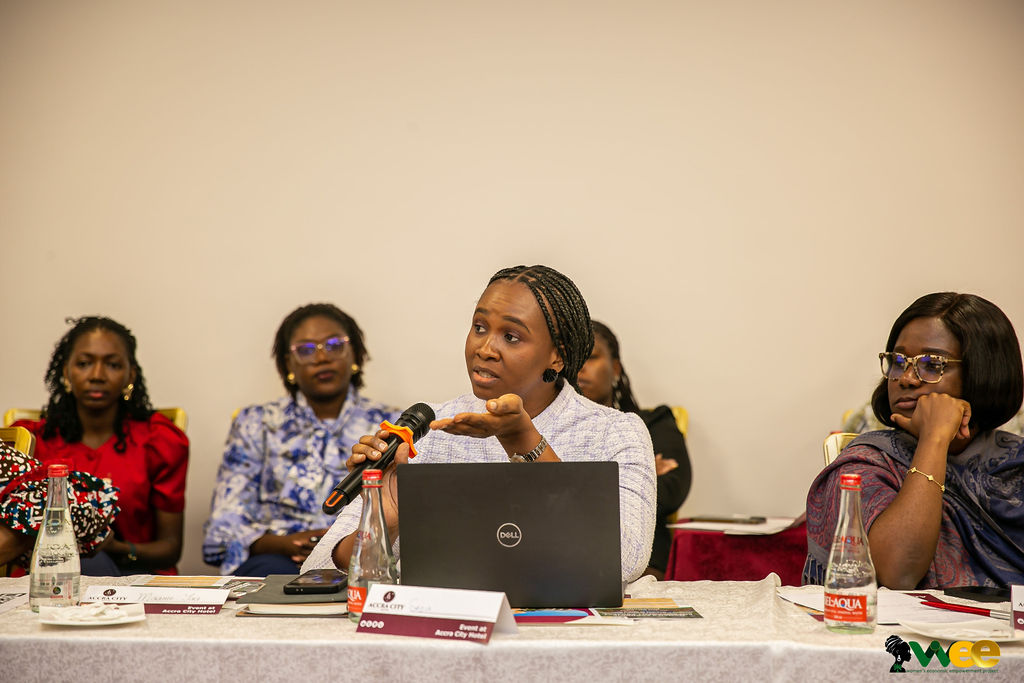
A stakeholder participant highlighting an issue during plenary

A stakeholder participant highlighting an issue during plenary

The convening on digitalisation and financial inclusion forms part of six thematic policy areas under the Promoting Effective Policies for Women’s Economic Empowerment Project—an initiative aimed at generating evidence to inform policies that create an enabling environment for women’s financial inclusion, business growth and economic agency. Now in its final year, the project has, over its three-year lifespan, undertaken extensive research and stakeholder engagements to assess the policies, institutional processes and lived experiences shaping women’s participation in the economy.

Click on the link below to access the visuals captured at the event.

https://visstudio.pixieset.com/weeproject/

Everyday Encounters with Fiscal Policy: Taxation, Public Spending, and Women’s Economic Empowerment

Preliminary Insights from the WEE-Ghana Project

Every day, thousands of informal sector workers in Ghana pay market levies and fees—but what do these payments reveal about how fiscal systems shape women’s economic opportunities?

Understanding how these everyday payments function requires recognising the specific nature of local revenue systems in Ghana. At the district level, many of the payments traders make are not formal income taxes but fees, levies, or tolls collected by district assemblies. These payments may include market tolls, stall fees, or charges associated with the use of trading spaces. Although these levies are relatively small, they form an important component of internally generated funds (IGF) for district assemblies. These revenues are used to support local services such as sanitation activities, market maintenance, and minor infrastructure improvements.
Fiscal policy—how governments raise revenue and how they allocate public expenditure –plays a central role in shaping economic opportunity. Tax revenues finance public services, infrastructure, and social programmes that influence livelihoods and access to economic resources. Yet the effects of fiscal policy are not always experienced equally by women and men. Women and men often participate in different segments of the economy, operate under different constraints, and carry different responsibilities within households and communities. As a result, fiscal policies that appear neutral may have distinct implications for women’s economic opportunities and economic security.
The WEE-Ghana Project examines these dynamics by assessing the impact of fiscal policy on women’s economic empowerment in Ghana. Drawing on interviews and focus group discussions conducted with primarily informal sector workers—particularly traders—and district-level policymakers, the project investigates how taxation, public spending programmes, and local decision-making processes shape everyday economic lives.
This blog series shares preliminary insights from the project’s field research, focusing on two interconnected dimensions of fiscal policy: domestic revenue mobilisation and public spending.
The series explores two questions:

  • How do informal sector workers experience taxation at the local level?
  • What challenges arise when tax systems interact with informal economic activity and the diversity of traders within it?

Together, these discussions provide insight into how fiscal systems operate in practice and what these dynamics may mean for advancing women’s economic empowerment in Ghana.
We begin with the most immediate point of contact between informal sector workers and the fiscal state: the fees and levies collected in Ghana’s markets.

Part 1

Fees, Levies, and the Local Fiscal Social Contract

Understanding these payments requires recognising the nature of local revenue systems in Ghana. At the district level, traders typically pay fees, levies, or tolls collected by district assemblies as part of internally generated funds (IGF), which support local services such as sanitation, market maintenance, and minor infrastructure improvements.

For many people in Ghana, the most visible interaction with the tax system does not occur through personal income taxes deducted from formal salaries. Instead, it takes place in local markets and trading spaces, where traders regularly pay levies or tolls collected by district assemblies.

These payments may appear small—a daily toll paid by traders selling vegetables, cooked food, clothing, or household goods. Yet they represent one of the most direct points of interaction between informal sector workers and public institutions. For many traders, the collection of market levies is the most immediate way in which the fiscal state becomes visible in everyday economic life.

Local markets are not only centres of commercial activity; they are also important spaces of women’s economic participation. Across many parts of Ghana, women dominate petty trading and small-scale retail activities. Market trade accounts for nearly 40 percent of women’s employment in urban areas and about 30 percent nationally, underscoring its central role in women’s livelihoods. These activities provide income for households and support a wide range of local supply chains linking rural production with urban consumption. As a result, the conditions under which markets operate—including infrastructure, sanitation, and regulation—have direct implications for women’s economic livelihoods.

Understanding how traders experience taxation in these spaces therefore offers an important entry point into examining how fiscal systems intersect with women’s economic empowerment.

As part of the WEE-Ghana Project’s ongoing research on fiscal policy and women’s economic empowerment, interviews and focus group discussions were conducted with informal sector workers—particularly traders operating in local markets—as well as district-level policymakers across several regions. These conversations provide early insights into how people experience taxation and public revenue systems in their everyday economic activities.

Market levies are paid directly by the traders to tax collectors who come to the markets for this purpose. In several markets, participants described how collectors move through trading spaces recording payments and issuing receipts. While traders were aware that they were required to pay levies, many could not explain how these payments were determined, how levy rates were set, or how the revenues collected were ultimately used by district assemblies. This gap between awareness of their responsibilities as taxpayers and knowledge of the taxation process and revenue utilisation is significant because taxation is not only a technical fiscal process. It is also part of a broader relationship between citizens and the institutions responsible for managing public resources.

This relationship is often described as the fiscal social contract. In its simplest form, the fiscal social contract suggests that citizens are more willing to pay taxes when they believe that public institutions are using those resources responsibly to provide public goods and services. Roads, sanitation services, water systems, and market infrastructure are all examples of public goods that can be financed through taxation. When taxpayers can clearly see how their contributions translate into improvements in these services, taxation is more easily understood as a collective contribution to shared development.

Where this connection is less visible, trust in the system may weaken. In several markets visited during the fieldwork, traders pointed to market environments where sanitation facilities were not functioning, waste collection was irregular, or access to water remained limited. In these contexts, respondents sometimes expressed frustration about paying levies while seeing little improvement in the infrastructure that supports their economic activities.

Although taxation systems rely on formal laws and administrative structures, they also depend on public trust and perceptions of fairness. When taxpayers believe that revenues are used transparently and effectively, compliance becomes easier to sustain. When the link between taxation and public services appears unclear, the legitimacy of the system may be questioned. This observation suggests that compliance at the local level is shaped by both administrative enforcement and perceptions of fairness. The presence of collectors ensures that payments are made, but perceptions of how revenues are used influence how traders interpret the legitimacy of those payments..When traders pay levies but do not see corresponding improvements in these conditions, they may question whether the system adequately supports their economic activities.

What challenges emerge when tax systems interact with informal economic activity and the diversity of traders within it? This is a question we take up in the next piece in this series.

Continue the Conversation

Follow the WEE-Ghana blog series for further insights into how fiscal policies—including taxation and public spending—intersect with women’s economic empowerment in Ghana.

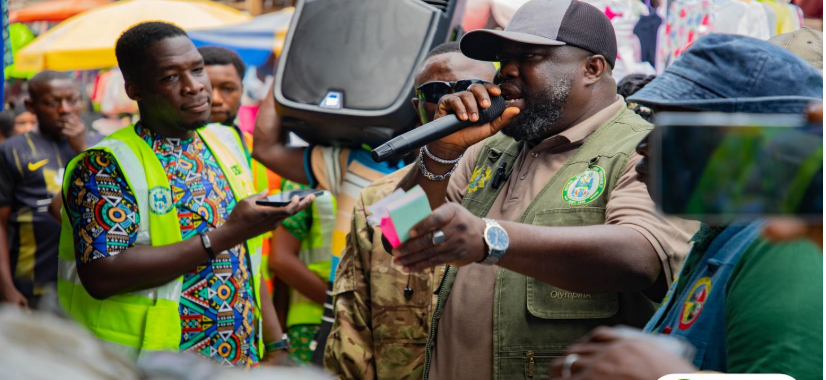
Photo Credit: Accra Metropolitan Authority

A clean, professional community health center or school setting in Ghana, visualizing care as a planned "public good"

From Leave Reform to Care Systems

National discussions on maternity and paternity leave are gaining momentum. Questions of duration and financing are now firmly on the table. Yet beneath those debates lies another issue: who will actually benefit from reform?

Much of the proposed framework is anchored in labour law, and labour law governs formal employment relationships. However, most Ghanaian women do not work within formal payroll systems. They trade, farm, braid hair, cook and sell, and move between informal contracts and seasonal work. For them, time away from work does not mean paid leave; it means lost income.

This concern surfaced during the WEE-Ghana convenings. Participants questioned whether reforms tied strictly to formal employment risk protecting a minority while leaving the majority exposed. If access is limited to formal workers, salaried employees gain security while informal workers absorb the shock.

Redistribution in this sense is not only about gender or employer financing. It is also about inclusion. If care protections remain confined to formal labour systems, reform may unintentionally widen the gap between women in office settings and those in markets, farms and small enterprises.

For this reason, the conversation cannot stop at amendments to the Labour Act. It must also ask how maternity protections can reach women outside payroll systems, what mechanisms could provide income security for informal workers during care periods, and how policy design can reflect the realities of women’s work in Ghana.

These are issues that the Labour Act and related legislation could address if policy frameworks more fully reflect the structure of Ghana’s labour market and make provisions for workers who do not have an employer.Care policy that excludes the majority of women remains incomplete. The deeper challenge is therefore not only how long leave should be, or who finances it, but whether reform reflects Ghana’s labour structure.

Care is still treated as a private matter. But it is public infrastructure.When caregiving is framed as a personal obligation, the burden settles quietly on households — and most heavily on women. When it is recognised as infrastructure, the frame shifts.

Infrastructure is planned. It is financed. It is maintained. It is treated as essential to economic productivity. Roads are infrastructure. Energy systems are infrastructure. Digital networks are infrastructure.

Care is no different.Without childcare, eldercare and social protection, women’s labour force participation becomes fragile. Businesses lose productivity. Families absorb shocks alone.

Redistribution at this level means more than adjusting leave duration or funding mechanisms. It means asking whether Ghana is prepared to invest in:

  • Public childcare systems
  • Workplace care standards
  • Social insurance expansion
  • Budget allocations that recognise care as economic support

This is not a social add-on. It is economic design. When care remains invisible in public budgeting, women subsidise the economy with unpaid labour. When care is built into public systems, the economy stabilises.

Over the past instalments, one theme has surfaced consistently: care reform is not a single policy adjustment; it is a structural shift. It requires sharing caregiving responsibilities more equitably between women and men, distributing costs in ways that do not distort labour markets, extending protections beyond formal employment, and recognising care as essential to national development.

These insights did not emerge in abstraction. They were sharpened through the WEE-Ghana project’s inception meeting in April 2024 and deepened through subsequent policy convenings in 2025.

As the project enters its third and final year, the work moves from exploration to consolidation. The findings emerging from these engagements and analyses will provide empirically grounded lenses to shape a more responsive and inclusive policy landscape.

This is not about adding another policy provision. It is about ensuring that reform reflects reality.

Follow the conversation and our ongoing work as it unfolds.
Find us on X and Instagram @ugpepwee, and on Facebook at Promoting Effective Policies for Women’s Economic Empowerment in Ghana

Diverse hands (symbolizing the state, employer, and family) working together on a task, representing the "shared social responsibility"

Who Pays for Care?

Sharing care is one thing. Sharing its cost is another. If Blog 2 examined how caregiving responsibilities might be more equitably distributed between women and men, this instalment turns to a practical question: when leave is extended — or formalised across the labour market — who absorbs the financial burden?

While public servants currently receive five working days of paternity leave, there is no universal statutory entitlement for private sector workers. The ongoing review of the Labour Bill seeks to formalise paternity leave nationwide and extend maternity leave beyond the current 12 weeks.

These proposals bring financing to the forefront. Discussions have focused, understandably, on time — maternal recovery, exclusive breastfeeding, father involvement. But time away from work carries economic consequences. And someone pays.

At the April 2024 inception meeting, employer representatives raised a concern that remains relevant today: if extended leave is financed solely by individual firms — particularly small and medium enterprises — does this create disincentives to hire or promote women of reproductive age?

The concern was not about whether care matters. It was about sustainability. If one employer bears the full cost of paid leave while managing workflow disruptions, the risk is not only financial strain — it is labour market distortion. In such a system, women of reproductive age may be perceived, however unfairly, as higher-cost hires.

That is why another perspective raised during the convenings pointed toward pooled financing mechanisms — systems where maternity and paternity protections are supported collectively rather than absorbed by individual employers.

This shifts the frame. The sharing of cost is not simply about fairness within households. It is about economic design.

Should maternity and paternity leave be treated as:

  • A private employer obligation?
  • A shared social insurance responsibility?
  • A hybrid model?

These financing questions are now part of the ongoing review of the Labour Bill, as the Ministry of Employment and Labour Relations engages stakeholders on the “who pays” principle.

Extending leave without resolving financing risks creating tension between social protection goals and labour market realities. Recognition affirms the value of care, but the design of financing systems determines whether reform is durable.

Yet another challenge remains. Even if the cost of leave is shared between employers and the state, who ultimately benefits from these protections — and who remains excluded?

In the next blog, we widen the lens further by turning to the question of informal sector inclusion.

Follow the conversation as it unfolds.
Find us on X and Instagram @ugpepwee, and on Facebook at Promoting Effective Policies for Women’s Economic Empowerment in Ghana.

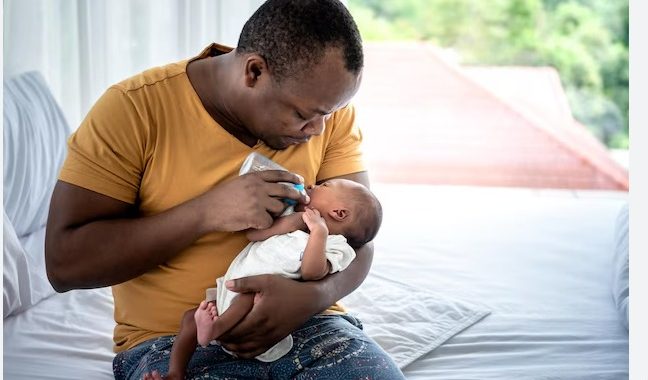
Challenging the "biological framing" of care by showing active

Sharing Care: The Harder Reform

If the April 2024 inception meeting established that care is economic infrastructure, subsequent convenings surfaced another reality: care reform requires revisiting long-standing assumptions about who is responsible for care.

At the 2025 Care Policies Convening, an early career researcher working on the care component under the Social Policies prong of the WEE-Ghana project, Dr. Faustina Obeng Adomaa, guided participants through a closer examination of gendered expectations. In framing the discussion, she noted how caregiving is often morally regulated in Ghanaian society.

The remark revealed how caregiving becomes a measure of womanhood. She further observed how early these expectations are instilled: it is common to hear parents scold their girl child about learning domestic responsibilities, while boys are rarely asked the same questions.

Redistribution of care responsibilities, then, does not begin in Parliament. It begins in childhood. If boys are not socialised into care, longer maternity leave may protect women’s time — but it does not rebalance responsibility.

Participants also questioned the biological framing of caregiving. As one noted, caregiving is often assigned to women on the assumption that women are naturally better suited to caring labour.

When care is treated as inherent to women, policy change appears optional. When it is recognised as socially organised labour, shared responsibility becomes logical.

Extending maternity leave recognises women’s caregiving role. Introducing paternity leave affirms that caregiving is shared. As Ghana advances discussions on both, the debate moves beyond duration. It turns to distribution.

Recognition builds agreement. Sharing care strengthens families, workplaces and economies. If care is to be shared more equitably between women and men, policy must reflect that balance — not only in law, but in practice.

Beyond the redistribution of care labour among men, women, boys and girls, there is also the question of what kinds of care and care-related work should be done within households and what responsibilities should be supported outside the home through public and private systems.

The current provision of five working days of paternity leave for public sector workers also raises questions about whether such short leave periods meaningfully support fathers’ participation in caregiving. In this sense, the existing provision risks remaining largely symbolic rather than transformative.

Experiences from other African contexts suggest that longer and better-designed paternity leave policies can encourage greater participation by fathers in early childcare.

And this leads to another question raised during the WEE-Ghana convenings: if caregiving responsibilities are shared, how should the costs associated with care be shared?

In the next blog, we turn to the economic side of reform — examining financing models, employer incentives and state responsibility.

Follow the conversation as it unfolds.
Find us on X and Instagram @ugpepwee, and on Facebook at Promoting Effective Policies for Women’s Economic Empowerment in Ghana.

A high-angle view of Ecobank's modern headquarters

Beyond Maternity Leave: Who Shares Care in Ghana?

A Four-Part Series on Redistribution, Reform and Women’s Economic Empowerment

Ghana is rethinking its labour laws. As of early 2026, the proposed Labour Bill seeks to extend maternity leave beyond the current twelve weeks and formalise paternity leave nationwide. While the bill remains under review, one thing is clear: caregiving has moved to the centre of labour policy debate.

Care refers to the activities required to sustain individuals and households. These include childcare, caring for the elderly and sick, cooking, cleaning, household management and other forms of unpaid domestic and reproductive labour. These activities sustain families and communities and make participation in the market economy possible, yet they are often treated as private responsibilities rather than matters of public policy.

This reform moment raises a deeper question. When leave policies change, who adjusts? Who bears the cost? Who gains protection — and who remains exposed? In other words, how is care shared across households, workplaces and the state?

Across this series, we reflect on how the current maternity and paternity leave debates intersect with deeper structural questions about care responsibilities, financing, informal sector inclusion and public investment in care. Each instalment situates WEE-Ghana’s research and stakeholder convenings within the evolving national policy conversation.

In this series, we return to the questions first raised in April 2024 and deepened through subsequent convenings: redistribution of care, informal sector inclusion, employer incentives, life-course economic security and the broader policy architecture shaping women’s economic futures.

The question is not whether care matters. It is whether policy makers are prepared to treat it as foundational.

Part 1

Care Is Economic Infrastructure — And This Conversation Did Not Begin in 2026

In February 2026, the Minister for Gender, Children and Social Protection, Dr Agnes Naa Momo Lartey confirmed that consultations are underway to extend Ghana’s current 12-week maternity leave. Proposals range from 14 weeks to as much as four to six months, alongside parallel efforts to formalise paternity leave nationwide. But this policy moment did not emerge overnight.

A year earlier, during her January 2025 confirmation hearing before Parliament, Dr Lartey signalled her intention to champion maternity leave reform as a core policy priority. That announcement crystallised an issue that had long been simmering beneath Ghana’s labour framework. Yet even that was not the beginning.

For WEE-Ghana, the structural tensions underpinning today’s debate surfaced earlier — on 30 April 2024, at the African Regent Hotel, during our inception meeting with 57 stakeholders representing government institutions, employers’ bodies, trade unions, informal worker associations, women’s rights organisations and international agencies. From the outset, a central concern emerged: policies that appear gender-neutral often disadvantage women because they fail to account for the structural realities of care.

The discussion quickly moved from principle to pressure. A business leader from the Executive Women’s Network described the strain her company experienced when several women in management were simultaneously on maternity leave. Although she provided paid leave and flexible arrangements, the financial responsibility rested entirely on the employer.

Representatives from the Ghana Chamber of Commerce and Industry echoed this concern: women’s reproductive roles are socially essential, yet the cost of maternity protection is unevenly distributed. From the International Labour Organisation, an alternative model was introduced — one in which maternity protection becomes a shared social responsibility through pooled social insurance contributions rather than an employer-only burden.

These were not abstract reflections. They were early articulations of the structural tensions now animating national reform conversations.

At that April 2024 meeting, stakeholders grappled with questions that remain urgent today:

  • If maternity protection is employer-funded, does it discourage the hiring of women of reproductive age?
  • If leave is extended, who absorbs the cost?
  • How do we design policy in ways that protect women without deepening labour market discrimination?

These questions converge around a foundational insight: care is economic infrastructure because it undergirds the functioning of the market economy. Care is the soft infrastructure that supports the functioning of the market economy, and the entire economy benefits from care, not only women.

Women’s economic empowerment cannot be assessed solely through labour force participation rates or enterprise growth. It must account for the unpaid and under-recognised care work that shapes women’s time, mobility and income continuity.

According to Anyidoho and Adomako Ampofo (2015), women’s labour force participation does not necessarily alter the gendered division of labour within households. Their study of Ghanaian bank workers found that even when women entered formal employment, they continued to bear primary responsibility for care work at home.

Evidence from the Ghana Living Standards Survey Round 7 also illustrates the scale of this imbalance. Time-use data show that women spend significantly more hours than men on unpaid domestic and care work such as cooking, cleaning and caring for children and other dependents (Ghana Statistical Service, 2018).

Co-Principal Investigators Professors Abena Oduro and Akosua Darkwah underscored that empowerment is not static. Policy environments can enable empowerment in one period and erode it in another. A woman may achieve economic stability — but lose it when healthcare costs, caregiving demands or weak social protection systems impose unexpected burdens.

This is why care policy sits within WEE-Ghana’s six priority policy areas under social and employment policy. The national maternity leave debate now unfolding does not introduce a new issue. It validates the structural concerns raised in April 2024.

Extending maternity leave, introducing paternity leave and encouraging workplace childcare signal recognition. But recognition is only the first step. The deeper question is whether care will finally be integrated into Ghana’s macroeconomic, labour and social protection architecture — or continue to be absorbed privately by women.

Care is not peripheral. It is foundational to economic planning. The labour that sustains households — raising children, supporting dependents and maintaining daily life — reproduces the workforce on which the economy depends.

In the next blog, we turn to the question of how caregiving responsibilities themselves are distributed within households and societies, and what this means for sharing care between women and men.

Follow the conversation as it unfolds.
Find us on X and Instagram @ugpepwee, and on Facebook at Promoting Effective Policies for Women’s Economic Empowerment in Ghana.

Visuals for the blogs are courtesy of Getty images